Herbicide Resistance Remains Top Concern As New Solutions Emerge
 December 29, 2025
 There’s an old Yiddish proverb: Man plans; God laughs. Planning is an important step; equally necessary is flexibility, and developing an herbicide program requires both.
“From an overall weed control standpoint, our expectations for 2025 were high,” says Josh Putman, U.S. Digital Farming Technical Agronomy Manager — BASF. “Mother Nature threw us a few curveballs, but the season ended strong. Parts of the country experienced cold and wet conditions early on, while others were hot and dry. That variability created some challenges for pre-emerge performance. Even with those factors, we saw strong results controlling weeds from both a pre- and post-emerge herbicide standpoint. I would say 2025 was a success.”
Even in a challenging year, there were plenty of bright spots.
“One major highlight from BASF is Surtain herbicide, which launched in 2025 and performed exceptionally well, especially on tough-to-control weeds like Palmer amaranth and waterhemp,” Putman says.
Syngenta is also looking forward to improving on a positive 2025.
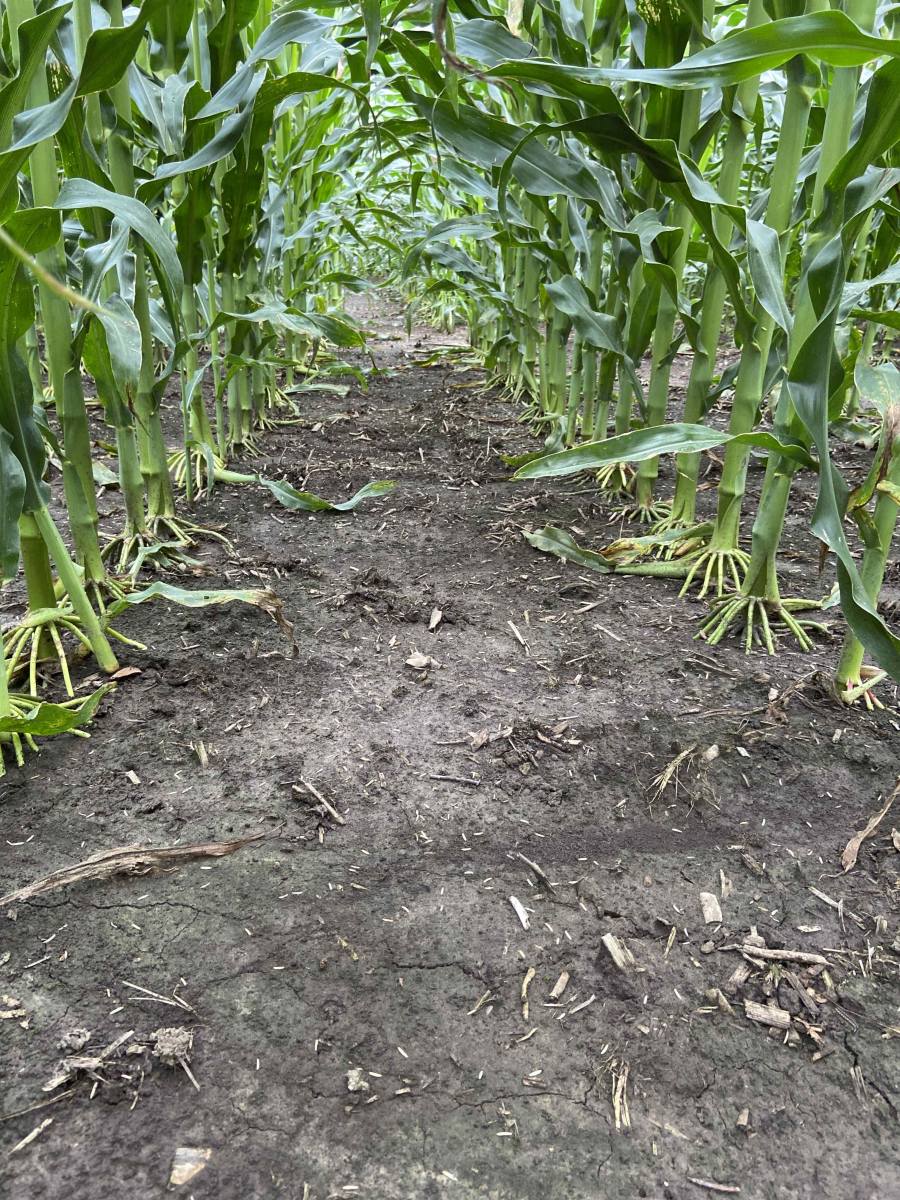
This Storen® corn herbicide treated field in Mount Horeb, Wisconsin, had clean rows and clear results through crop canopy. Photo: Mount Horeb, WI, 7/24/2024, M. Liegel. Syngenta.
“Growers are looking for better weed control, so we expected growth in our high-performance, residual products,” says Kevin Gesse, Head of Herbicide Product Marketing. “To achieve stronger, longer-lasting control of difficult weeds, we expect growers to continue increasing their adoption of residual products,” he continues. “Each of these products (Storen and Acuron for corn – Tendovo for soybean) contain multiple, effective sites of action for broad-spectrum, residual control of the toughest weeds, including waterhemp and Palmer amaranth.”
Dr. Dominik H. Hoffmann, North America Crop Protection — Product and Asset Manager Corn, Soy, Cotton Herbicides, Bayer CropScience, told CropLife Magazine: “It’s been a tough couple of years for on-farm profitability. When talking with growers, we repeatedly hear the need for new herbicide solutions to protect their crops’ yield potential, especially as herbicide resistance continues to grow. Luckily, Bayer has more innovations planned in the next few years. That innovation engine will accelerate as we work to introduce two new herbicides – Convintro and Icafolin — as well as Vyconic, a new soybean trait package with five herbicide tolerances.”
Retailers Continue to be Key
“Retailers remain trusted advisors for farmers, and their recommendations carry weight,” BASF’s Putman says. “With the large availability of information online, I see retailers as a trusted advisor to both provide useful herbicide information, and to help farmers sort through information they have gathered on their own (i.e., soil tests and yield data) to make the best agronomic decisions for their operation.”
The relationship between retailers and their grower-customers is critical.
“The role of the retailer has evolved into being a solutions provider, and it’s more important than ever.” Syngenta’s Gesse says. “Not only are retailers making herbicide recommendations, but they’re also doing custom applications, integrating precision ag and helping customers with risk management decisions.”
With any new tool, as sophistication increases, the need for education becomes more important. During the COVID era, manufacturers, retailers, and growers embraced (or were forced) to adopt various tools to ensure they were up to date with everything they needed to know. The COVID era created a number of challenges for supply chains, and providers had to become creative to ensure they could still deliver products around the globe.
“We continue employing sourcing strategies and investing in our supply chains to efficiently and effectively deliver our products when and where they’re needed,” Gesse says. “Inventory levels have reached historical lows across the industry, so we’d encourage retailers to have proactive planning conversations with their Syngenta sales reps to ensure we successfully meet their needs.”
BASF’s Putman points to another long-standing problem that drives home the need for herbicides.
“A key trend affecting herbicides is the continued development of herbicide-resistant weeds,” he says. “Palmer amaranth, for example, has some populations out there that are now resistant to nine different sites-of-action. So, when you think about a tank-mix, if you have nine products in the tank, you might not get control over that Palmer amaranth population. Research and development of new chemistry, new active ingredients and novel sites-of-action are an important piece to the puzzle of managing these weeds and preserving yield potential.
“Resistance is driven by a natural process of adaptation,” Putman continues. “Each year, as we rely on the same herbicide programs and sites-of-action, we apply selection pressure that causes weeds to adapt. That’s why resistance management is crucial to keep in mind as we develop herbicide programs for
each season.”
Market Challenges
“Herbicide resistance grows exponentially, and metabolic resistance poses a significant threat to multiple herbicide groups,” Bayer’s Hoffmann says. “The introduction of technology advancements like See & Spray and its use as an herbicide enhancement will allow for more effective sprays and greater efficiency in grower spend.”
It’s difficult to talk about herbicides without discussing resistance.
“From a pest control standpoint, herbicide resistance remains one of our top concerns,” BASF’s Putman says. “In the next five to 10 years, we don’t anticipate seeing another one-shot, ‘bulletproof’ product like Roundup or glyphosate coming to the market. Even then, as we saw in the past with Roundup, weeds became resistant very quickly. They evolve.
“Resistance can develop fast, so it needs to be on the front of our minds because many of the products used in the industry today are often pre-mixes with three or four active ingredients,” he continues. “So, we’re using the same active ingredients with the same sites-of-action on the same acres year-over-year, and that just exacerbates the resistance we have in various weed species. Managing resistance will continue to be a primary concern now and in the future.”
That concern is one reason manufacturers continue to develop new products. Developing new products, though, has its own issues.
“Many herbicides have been around for a long time, and resistance is catching up,” Putman says. “One contributing factor to this is how long it takes to bring a new crop protection product to market.”
Market Opportunities
“In the long-term view, continued innovation and development of new herbicide solutions remains crucial,” Putman says. “At BASF, we are consistently and continuously investing in research and development to help farmers, and we’re constantly looking for new solutions to help combat resistance.
“Presently in the industry, we’re just starting to see the adoption of new precision application technologies and other field innovations in the field,” he continues. “In the future, that’s going to be a big benefit to farmers through various means of cost savings and operational efficiencies. Farmers can partner with their local BASF representative and retailer to look back at past weed control programs and start building a strong plan for 2026 and the years ahead. Even if waterhemp or Palmer amaranth aren’t an issue on your farm yet, now is the time to plan and stay prepared.
“At BASF, we are fully focused on helping farmers succeed in doing the biggest job on Earth,” Putman says. “Because of this, we’re excited to share new innovations coming to the market. We’re anticipating registration of some of these products shortly, and over the next few months we’re going to introduce them at some of the larger agriculture trade shows. Stay tuned and be ready to hear about new developments throughout the winter!”
Other companies such as Corteva Agriscience foresee tank mixes as a future trend.
“As we look for growth opportunities, farmers will continue to need herbicides that have excellent tank-mix compatibility so they can accomplish more each pass across the field,” says Eric Scherder, Ph.D., U.S. Crop Protection Technical Lead. “Tank-mix compatibility means fewer trips across the field, which saves time and fuel costs. With their excellent tank-mix compatibility, these products help farmers get more done during the critical windows of field work each season.”
While manufacturers provide the products, they know their jobs would be much more difficult if it wasn’t for the growers’ trusted retailers.
“Our belief is that the role of the retailer is more important than ever in reaching the grower and addressing their challenges,” Bayer’s Hoffmann says. “Having a broad distribution network helps bring innovation to growers and empower them with access to the latest technology. There are more products in the marketplace than ever before, and growers need help understanding how those products fit their acre. The retailer remains a trusted advisor when it comes to herbicides.”
Subscribe Today For
