Breaking Down U.S. Ag Chem Distribution: Insights Every Retailer Should Know
Entering the U.S. ag chemical market isn’t just about having the right product — it’s about understanding the distribution landscape and aligning your strategy with retailer needs. At the 2025 AgriBusiness Global Trade Summit in Orlando, FL, a panel discussion, “Navigating Ag Chem Distribution in the U.S.,” explored the first three tiers of the U.S. distribution network, offering practical guidance for suppliers seeking traction with ag retailers. AgriBusiness Global, CropLife’s sister brand, brought together insights from Amy Asmus, Owner and Vice President of Asmus Farm Supply, Inc. , Casey McDaniel, Vice President at Nutrien’s Loveland Products; and Jeff Pritchard, CEO of WestLink Ag Group. Here, we provide intel from McDaniel and Pritchard, both of whom work closely with retailers every day.
Tier One: National Retail Leaders
Casey McDaniel shared how a top-tier distributor like Nutrien works with U.S. ag retailers and growers.
“From a retail perspective, we hold about 22% market share in the U.S.,” McDaniel said. Nutrien’s network of over 1,400 U.S. stores is supported by more than 3,000 crop consultants, providing retailers and growers with extensive agronomic support, financing options, and digital tools.
For suppliers, understanding Tier One distributors is critical. “Working with a distributor like Nutrien — or Helena Agri-Enterprises, or others—means you must have your ducks in a row. They know the market better than anyone else, so there’s no room for missteps,” McDaniel emphasized.
Suppliers who offer only competitive pricing without understanding market needs will struggle. Retailers benefit from Tier One relationships because these distributors combine global procurement power with strong local support, ensuring product reliability and access across regions.
McDaniel also highlighted the importance of flexibility in product offerings. “We balance support for both branded manufacturers and our proprietary products. Branded manufacturers remain important because they bring new tools to the market, which we are always evaluating. Quality is our top priority.” For retailers, this means Tier One distributors can offer both new innovations and proven products to meet customer needs.
Tier Two: Regional Buying Groups
Jeff Pritchard spoke on the role of Tier Two distribution, which is often regionally focused and built around buying groups. WestLink Ag Group has 48 member companies across the U.S. and two in Canada, serving as a resource for independent retailers.
“We aren’t national in the traditional sense, but we have regional pockets where we’re strong: the Pacific Northwest, California, portions of the Midwest, and the Northeast. We also have strong representation in Florida and Texas,” Pritchard explained.
For U.S. ag retailers, buying groups like WestLink offer both scale and support without the need to operate independently on a national level. Pritchard noted, “Our focus is primarily agronomy-first. Branding isn’t our priority; we focus more on post-patent technologies in the market rather than loyalties, bundling programs, or high-maintenance product lines.”
Retailers working with Tier Two groups should understand that the supplier-retailer relationship often requires active engagement. “If you have a new product, you need to identify target regions — such as Idaho, Washington, Oregon, or Maine for potatoes — and work closely with individual retailers there. Persuasion is key; in agriculture, the best way is to ‘show, don’t tell.’”
Credit and financing are also critical. Pritchard described how WestLink manages transactions: “The member issues a purchase order to us, we issue a purchase order to the supplier, the member pays us, and we pay the supplier. This allows us to manage credit at the group level rather than individually, which saves time and maintains trust.”
What Retailers Should Know
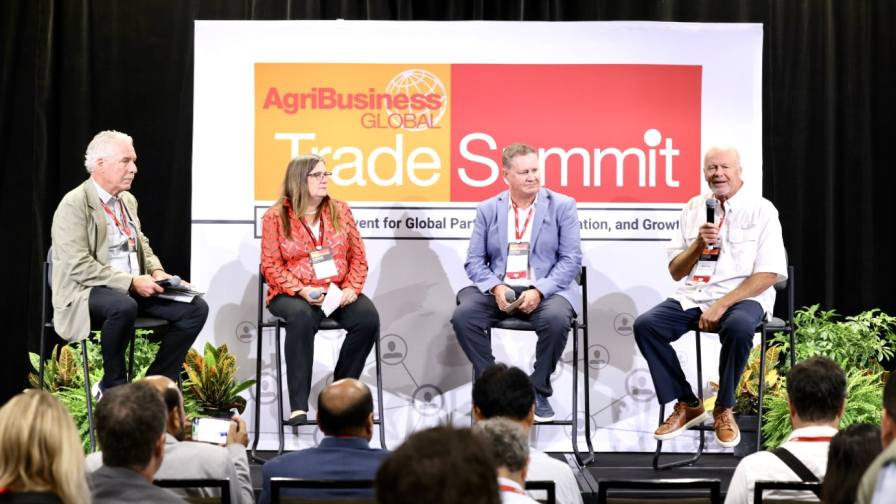
The session “Navigating Ag Chem Distribution in the U.S.” at the 2025 AgriBusiness Global Trade Summit featured panelists (from left) Jeff Pritchard, CEO of Westlink Ag Group; Amy Asmus, Owner and Vice President of Asmus Farm Supply; Casey McDaniel, Vice President at Loveland Products; and moderator Mike Snyder, President of Red Rocket Consulting.
For U.S. ag retailers, understanding these tiers is essential to maximizing product availability, supporting growers, and managing financial risk. Tier One distributors provide scale, support, and national reach, while Tier Two groups deliver regional expertise, flexible post-patent options, and collaborative buying power. Both require suppliers who are prepared, reliable, and strategically aligned with the distribution partner’s goals.
McDaniel summarized the reality for retailers and suppliers alike: “Simply offering a price isn’t enough — we value the relationship and expect partners to understand the market and our expectations.” Meanwhile, Pritchard emphasized the practical side of engagement: “Relationships are a two-way street… suppliers need competent, capable people on the ground to drive demand, because we don’t act as their sales team.”
For ag retailers looking to navigate the U.S. distribution network, insights from Tier One and Tier Two leaders can help guide decisions on product selection, supplier partnerships, and market strategies. By aligning with distributors who understand the complexities of the U.S. ag market, retailers can deliver better solutions for growers while supporting long-term business growth.
Subscribe Today For
