What Ag Retailers Need to Know About the New Crop Protection Landscape

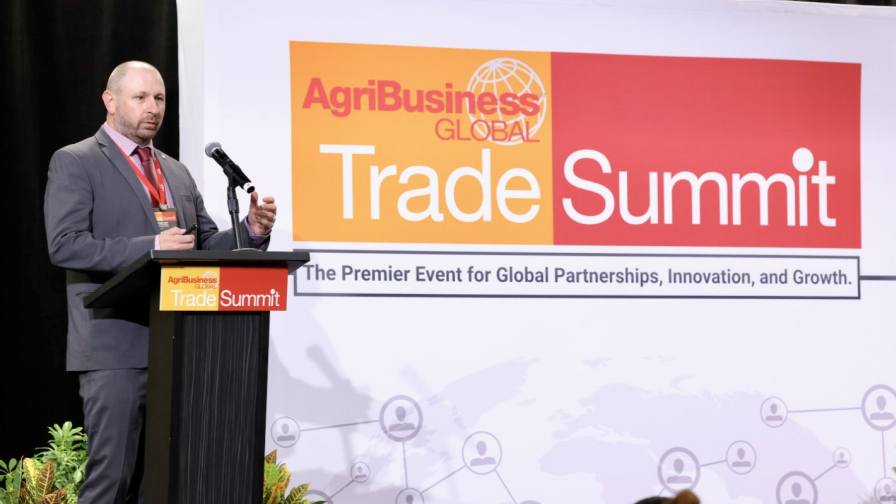
Derek Oliphant, Partner at AgbioInvestor, presented the session “Global Crop Protection: What’s Happening and What’s Next?” at the 2025 AgriBusiness Global Trade Summit in Orlando, FL.
After two years of steep decline, the global crop protection market is finding its footing again. According to Derek Oliphant, Partner at AgbioInvestor, the worst appears to be over — and a new era of steadier, more strategic growth is emerging.
Oliphant shared his outlook during the session “Global Crop Protection: What’s Happening and What’s Next?” at the AgriBusiness Global Trade Summit 2025. As the international sister brand of CropLife, AgriBusiness Global focuses on global crop input trade, manufacturing, and distribution trends — insights that help U.S. ag retailers understand how worldwide shifts can influence local business decisions.
For many retailers and distributors, those global dynamics are beginning to show up in product availability, pricing, and technology adoption across the U.S. market.
Finding Stability After a Rough Stretch
“The last few years have been some of the toughest we’ve seen for crop protection,” Oliphant said. “Low commodity prices, difficult weather, and a buildup of inventories all weighed on the market. But 2025 is showing signs of stabilization.”
AgbioInvestor estimates a 1.8% decline in global market value this year — still negative, but far less severe than the nearly 7% contraction in 2024. In constant terms (excluding currency swings), the market is even starting to turn slightly positive.
That’s translating to a healthier outlook for companies throughout the supply chain.
“We’re finally seeing the balance between supply and demand improve,” Oliphant noted. “Usage on the ground is picking up, and companies are a bit more optimistic heading into 2026.”
For U.S. ag retailers, this stabilization could mean fewer inventory carryovers and more predictable product flow after several volatile seasons.
Commodity and Input Prices Regain Balance
Commodity prices remain the best indicator of grower spending power. “There’s a very strong correlation between commodity pricing and crop protection demand,” Oliphant explained. “When farmers earn more, they invest more in their crops.”
After the rollercoaster of 2022-2023 — when prices spiked and then crashed—markets for key crops like corn and soybeans have leveled off. Futures suggest continued stability through 2026.
At the same time, agrochemical prices have fallen from their pandemic highs. “We had inflated prices in 2021-22 due to supply constraints and pre-buying, especially out of China,” Oliphant said. “Since then, production has ramped up and demand softened, leading to price normalization.”
For the U.S. market, manufacturing costs remain somewhat elevated but far more stable — welcome news for retailers planning product pricing and margins.
Regulation and Resistance Drive New Product Trends
While regulatory shifts often start in Europe, they ripple across the global industry. “The EU continues to remove active ingredients, and that’s influencing supply chains everywhere,” Oliphant said. “As older products are phased out, replacement chemistries and biologicals are stepping in.”
Resistance pressure is also shaping product portfolios.
“Growers are demanding new modes of action,” he added. “That’s creating opportunities for companies with innovative technologies — and for retailers who can help farmers build more diverse and sustainable crop protection programs.”
Biologicals Step Into the Spotlight
One of the fastest-growing areas worldwide is biologicals, including biopesticides and biostimulants. While still small—less than $2 billion in manufacturer sales — they’re expanding rapidly, particularly in Latin America and specialty crops.
“Biologicals are becoming more effective, more stable, and easier to integrate,” Oliphant said. “They’re no longer just for niche uses—they’re part of mainstream resistance management and sustainability strategies.”
That trend is now reaching U.S. retailers as more suppliers expand biological portfolios and growers look for flexible, environmentally conscious solutions.
Innovation Comes at a Cost
Developing a new active ingredient costs more than $300 million today, limiting how many new molecules reach the market. To offset that, manufacturers are partnering with startups using AI and advanced screening tools to accelerate discovery.
“We’re seeing new models for innovation,” Oliphant said. “Smaller companies bring specialized technology; larger ones bring scale and market access. Together, they’re helping to bring the next generation of crop protection products forward.”
What It Means for U.S. Retailers
Looking ahead, Oliphant projects about 2% annual growth in conventional crop protection through 2030, with biologicals expanding far faster.
“The global crop protection market is evolving — not disappearing,” he concluded. “Retailers that stay informed, diversify their product mix, and embrace innovation will be best positioned to capture the next wave of growth.”
Subscribe Today For
