From Boom to AI: Charting 25 Years of Agricultural Tech Revolution
 November 3, 2025
  Editor’s Note: As we mark the first 25 years of the 21st century, CropLife reflects on the innovations, challenges, and transformations that have shaped ag retail — honoring our past while looking ahead to agriculture’s promising future. In this article, we explore how rapidly evolving technology and shifting market dynamics are redefining farming, empowering growers, and setting the stage for Agriculture 4.0.
“Any sufficiently advanced technology is indistinguishable from magic.” — Arthur C. Clarke
Apply that quote to just about any era of agriculture and the farmers would be astonished and amazed by today’s “magic.” Just months ago, the initials AI would stand for active ingredient; today those two letters imply artificial intelligence.
Imagine a 19th century grower arriving on a 21st century farm. Gone are the horse-drawn plows and the majority of laborers. Instead, they’d see huge and automated machinery, detailed data, sensors, genetically modified crops, and a variety of other things that he could easily be convinced are magic.
“The transition from technology being a ‘nice to have’ to ‘a must have’ over the past 20 to 25 years has been one of the most significant changes in equipment,” says Alex Caldwell, Case IH Product Marketing Manager — Crop Application. “It’s given operators the ability to leverage data to make better decisions across application, yield management as well as in cab experiences.”
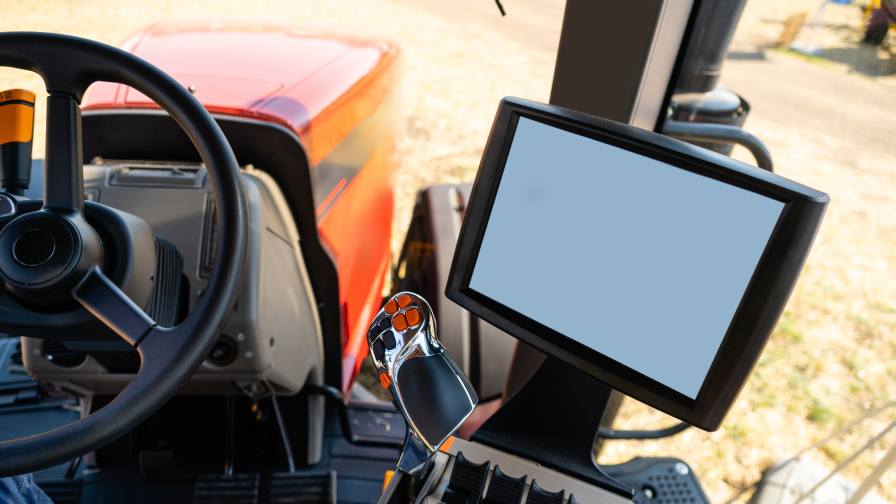
One of the biggest changes for applicators over the past 25 years is how they leverage data to make better decisions across application, yield management, as well as in cab experiences. Photo: scharfsinn86 / stock.adobe.com
Farming has changed so quickly, one needs only go back a couple of decades for growers to see recent advances that seem like magic.
“Retailers are now expected to de-risk innovation. It’s not enough to say, ‘trust me.’ You need the data,” says Matt Hansen, CEO of Growers Edge. “The biggest change is the role of technology and how retailers use it to manage risk on behalf of their grower customers. Risk isn’t only managed by instinct. It’s something you can measure, protect against, and act on in real time. Retailers used to sell products. Now, they sell proof. Farmers have heard the same claims for decades. Now, retailers have the data and the ability to guarantee better performance. They can distill the complicated into the simple.”
With the regulatory environment limiting the crop inputs available the industry has had to look for new solutions. Those include spot spraying (i.e., John Deere’s See & Spray), unmanned aerial vehicles, more advanced chemicals, genetically modified crops, and laser weeders among others.
Now that we’re 25 years into the 21st century, the CropLife Media Group decided to look at how quickly equipment has changed. Many of the new technologies, which were once extras, are now simply table stakes. Just before the turn of the 21st century, Trimble introduced an autopilot steering system.
“One of the first demos was at a vegetable farm that traditionally laid out on 40 rows,” said Erik Ehn, who at the time was Director of Product Marketing for Trimble’s Agriculture Division. “When we were finished laying it out with Autopilot, it had 42. You could hear the growers talking, calculating in their heads the additional revenue that would come from picking up two rows. From that moment we realized this was going to have an immediate impact on profitability in this market.”
According to an article CropLife editors put together in 2013, “from 2005 to 2013, automatic guidance adoption moved from 4% to more than two thirds of all retailers, proving its efficiency and ergonomics value.”
Another trait that found its footing (became the standard) at the start of the century was the 90-foot boom. “In 2004, the Asian soybean rust scare and fear of a shortage of application equipment brought more players and more sophistication to the high-clearance market over the past decade, and increased sales to the grower market has sped innovation in sprayer technology for everyone,” we wrote in 2013.
Come and Gone
So how fast does ag technology change? Lightbars made their appearance in the 1990s, pushed the industry to develop more accurate and more automated guidance systems, and then disappeared from the scene soon thereafter.
The internet revolutionized nearly every industry including agriculture. In March 2000, the dot-com bubble peaked, and shortly thereafter the bubble burst erasing trillions of dollars of market value.
Joe Dales, then President of Farms.com, “saw it all and lived to tell the tale. ‘I’m glad I went through it, but I wouldn’t want to go through something like that ever again,’” he told CropLife® Magazine.
The internet bubble wasn’t the only challenge the industry saw in the first decade of the 21st century. In 2008, a recession and credit crunch had an enormous impact on the industry.
In the “30 Years 30 Stories” article, we wrote, “In the months leading up to the fertilizer meltdown of 2008, every expert (and the editors of this publication) were encouraging retailers to procure and store fertilizer to ensure a stable supply for the year ahead. And most retailers heeded the call and paid the going rate.
“In the fall, the price took a devastating tumble that left many retailers holding the collective bag of high-priced inventory in a now depressed market.”
That was somewhat reflective of the reaction to Russia’s invasion of Ukraine in February 2022. Prices spiked to record heights due to disrupted supply.
Adoption Rates
Every new technology is a bit of a gamble. No one knows how quickly a new technology will be adopted — if at all.
“You can’t always expect everyone to nod in agreement to the benefits of a technology, but that was pretty much the case when automatic boom shutoff broke into the market in the late 2000s,” we wrote in 2013.
As Paul Welbig, then Marketing Manager at Raven Industries, put it: “The company “started working on elements of that product many years before it became ‘mainstream’ because it made such common sense. I mean, we’re using GPS and mapping, so we already know where we’ve been and where we’ve sprayed. Why wouldn’t we just automatically shut off the boom sections where we already were? It’s a great way to improve the quality of application, and since we’re not over-spraying, we’re saving money as well.”
The More Things Change, The More They Stay the Same
Looking through many of the back issues of CropLife it wasn’t that hard to find headlines that could easily be shared with stories we write today. Once such article “Technology Standards Moving Forward” addressed retailers frustrations with technological implementation — “why can’t these units talk to each other?”
In that article, we wrote: “The lack of standards that would allow equipment to interact and exchange information more seamlessly has dogged the adoption of precision technology almost from the beginning. And until recently there hadn’t been a lot of real progress on that front.”
While progress has been made, the final sentence of that article still applies: “There’s still much work to do, but with everyone in the room understanding what’s at stake, the search for a solution is headed in the right direction.”
Agriculture 2.0, 3.0, or 4.0
In February 2013, Jim Budzynski, then Managing Principal of MacroGain Partners and a Venture Partner with Open Prairie Ventures, wrote a piece reflecting on a previous article in which he wrote about technology conversion. It elicited wide range of responses.
In his updated article he wrote: “There are lots of subplots and intrigue in this battle. It’s ironic, for example, to see the Apple folks who complained bitterly for years about how Microsoft was trying to leverage its huge ‘installed base’ of Windows users to block others now vigorously pursue the ‘App Store’ in an attempt to do precisely the same thing. It’s sad, too, to see companies like Research In Motion — that developed the highly successful Blackberry — see its fortunes decline dramatically when it was unable to offer the complete bundle and interoperability that customers demand.”
Does anyone still use a Blackberry? Budzynski compared those concerns with a similar approach in ag.
“The same technology convergence is happening in agriculture! So what technologies are ‘converging’ in Agriculture 3.0? The formerly distinct areas of crop nutrition, crop protection, precision agriculture, and seeds are actively converging,” he said.
It seems the pace of technology is increasingly fast. So where is ag now?
Budzynski wrote his piece 2013. Doing quick search of Agriculture 2.0 suggests that we entered that phase in 2023 — 10 years after Budzynski suggested we were soon to enter Ag 3.0. With the introduction of artificial intelligence, CropLife Magazine Editor Eric Sfiligoj, suggests we’re about to enter the Agriculture 4.0 phase.
The Next 25 Years
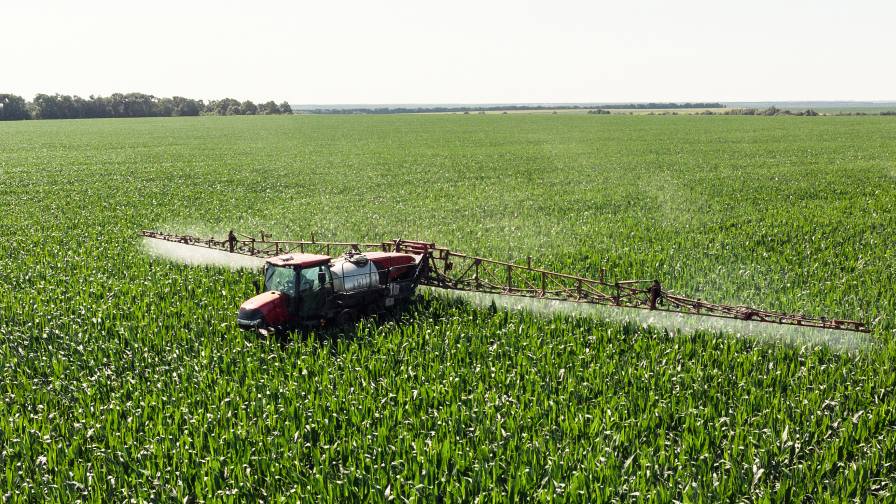
With ongoing advances in automation, efficiency will continue to improve for applicators over the next 25 years.
“We can expect to see more ongoing automation of tasks and machine decision making capabilities to improve efficiency on input utilization,” Case IH’s Caldwell says. “Additionally, proactive and smart monitoring of equipment to prevent unneeded downtime. Applicators will no longer need to reactively contact homebase or equipment dealer. To ensure ultimate uptime, alerts, parts and service needs will automatically be shared through maintenance and management technologies.”
It’s easy to see which predictions were spot on, those that were near misses and those that were well wide of the mark. Few have the predictive power of Nostradamus, the 16th century French astrologer, apothecary, physician and prognosticator.
In 2013, Joe Russo, President of Bellfonte, PA-based ZedX, penned an article for CropLife on what he thought agriculture might look like five decades into the future. Among is revelations are driverless cars that in which riders who can access a “voice-activated onboard computer” (which uses the front window as a screen). Once he arrives at his destination, he uses a headset which allows him to access a “paper-thin, roll-out screen.”
Some of Russo’s predictions about his future character and the farm include: “Everywhere machines moving in an orchestrated pattern. They are lifting and loading containers of seed, fertilizer, chemicals, and other materials from storage facilities to autonomous trucks. They are removing empty containers from returning trucks. Tractors with their various implements can be seen leaving the grounds of the company. All these vehicles and machines in their various configurations can be tracked through the console. As long as John (Russo’s character) remains inside the security shield, he can remotely access the command center and interact with his screen.”
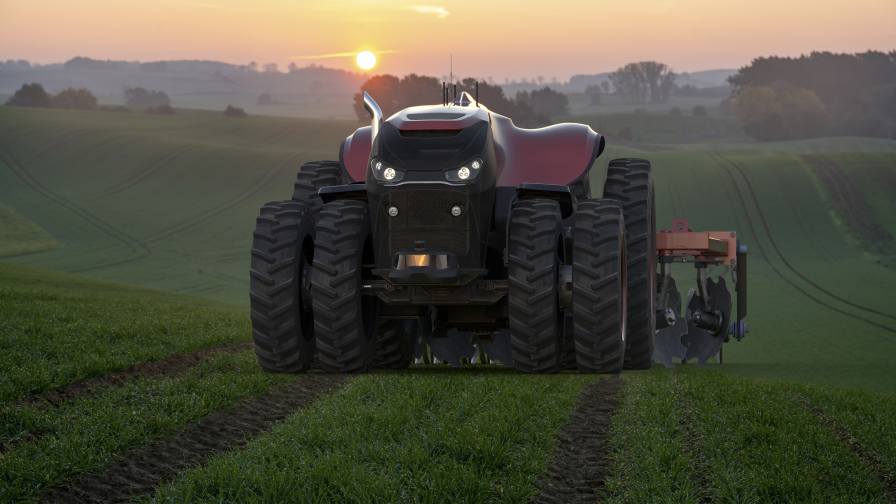
The rise of autonomous machines was predicted by many in the industry at the start of the century.
Given the rise of artificial intelligence and the autonomous machines it controls, Russo seems to have accurately predicted driverless vehicles, and it seems, now, they might arrive in the very near future.
Whatever the reality of 2063 becomes, history suggests that some of the industry’s expectations will come to fruition. Others are unlikely or will, at best, take many more years to play out.
“AI will do for decision-making what remote sensing did for precision agriculture. It won’t replace people, but it will reshape what they spend time on,” Growers Edge’s Hansen says. “Pressures for sustainability and profitability will continue to grow in ag retail. The products that sell will prove they’re better for the land and the bottom line.
“The best retailers today are problem-focused, not product-focused,” he continues. “It’s partnering with growers to solve for risk, access, and profitability.”
Subscribe Today For
