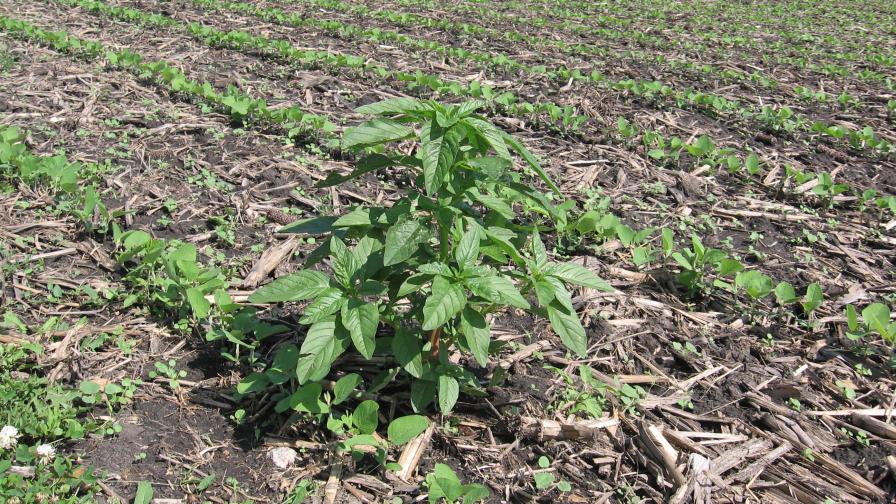
Weeds often tell a story about how a farm is managed, writes James Hoorman at Ohio’s Country Journal. Most weeds grow really well in soils low in calcium with low humus. Often potassium and/or magnesium levels are high, but not always. Many weeds act as collectors of minerals that are deficient in the soil. When weeds die, they often improve the mineral nutrition of the soil. If farmers can understand what the weeds are telling them, they can change their management to reduce weed populations.
Two problem weeds are giant foxtail and Canada thistle. Both these weeds thrive in soils that are highly saturated, poorly drained, have low porosity, and have low humus. These soils have low oxygen levels and contain anaerobic bacteria which are generally harmful to crop health. Low calcium and phosphorus are common problems in these soils. For Canada thistle, copper is also often low. Thistle roots can grow 20 feet deep and are a perennial plant, so they are trying to add humus and get oxygen deep into the soil. Foxtail roots have shallow fibrous that are trying to move oxygen into the soil surface. Since these soil tend to be so tight, most micronutrients are in excess supply but since most plant roots can not grow in water-logged soils, the micronutrients are either not plant available or leach away.
Most broadleaf weeds like a soil environment where potash or potassium exceeds available phosphorus.
Marestail and waterhemp thrives where potassium and magnesium levels are very high but calcium and phosphorus are very low. Both these weeds produce high volumes of weed seed but the weed seed generally only survives 1-3 years. Both weeds do not like a lot of competition, so they grow on bare soils that are anaerobic (lack oxygen), have low soil humus, and are compacted or have poor soil structure.
Read more at Ohio’s Country Journal.