
Start spreader-ing the news. Manufacturers plan to upgrade their offerings for the next growing season delivering value for retailers and their grower-customers. CropLife® Magazine spoke with several manufacturers about their expectations for the coming year and why they’re eager for 2026 to begin.
“This year has been more subdued than in the past several, but demand is still holding up as farmers and retailers look to improve efficiency and maintain their replacement cycles,” says Jon Simonsen, President, Simonsen Industries. “We are expecting 2026 to remain strong. Our customers are looking for value in their purchases and seem to be doing their homework when it comes to equipment purchases.”
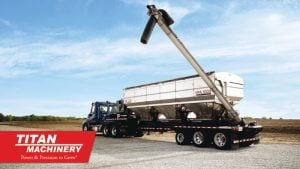
Arnie Sinclair, Vice President, Strategic Accounts and Application, Titan Machinery, said the company expects 2026 “spreader numbers to be flat to slightly up as split application of nitrogen continues to grow.”
When asked about this year’s sales Shannon McComas, Vice President, Sales and Marketing, Loftness, said it was “not as we had hoped. Interest has been high, but sales are sporadic. We have some opportunities in front of us that are very promising.”
That said, the coming year looks a bit more hopeful: “We are going into 2026 with cautious optimism,” he said. “We have some marketing and product initiatives we are discussing that we hope will generate buzz.”
Manufacturers hope to turn that buzz into sales. One way they do that is by delivering new and upgraded features.
“Increasing spread width, more sections, and higher accuracy is being driven by customer demand and market conditions,” says Joe Anderson, Vice President Sales and Marketing, GVM.
“Fewer passes equals less compaction, which leads you to higher yields and larger ROI. A 120-foot spreader will be on the market for 2026. We are increasing our section control capabilities and adding new features to be released soon. Our Standard 105-foot and beyond spreader has been on the market for the past 23 years.”
Larger spread widths that deliver more product more quickly are among the new features from manufacturers.
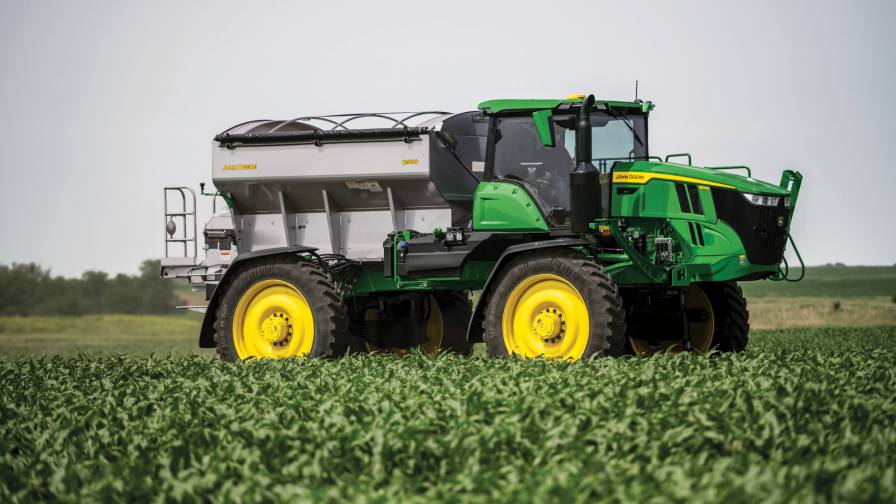
“The latest spreader models have a range of new features designed to enhance productivity, precision, and ease of use in the field,” says Dave Mulder, Application Marketing Manager for John Deere. “A 120-foot spread width with most dry fertilizer products delivers up to a 33% increase in productivity, allowing operators to cover more acres per hour. Output capacity has increased by 25%, enabling higher application rates at faster speeds — up to 800 pounds per acre at 15 mph — depending on product density and quality.”
A wider spread width is quickly becoming the new standard.
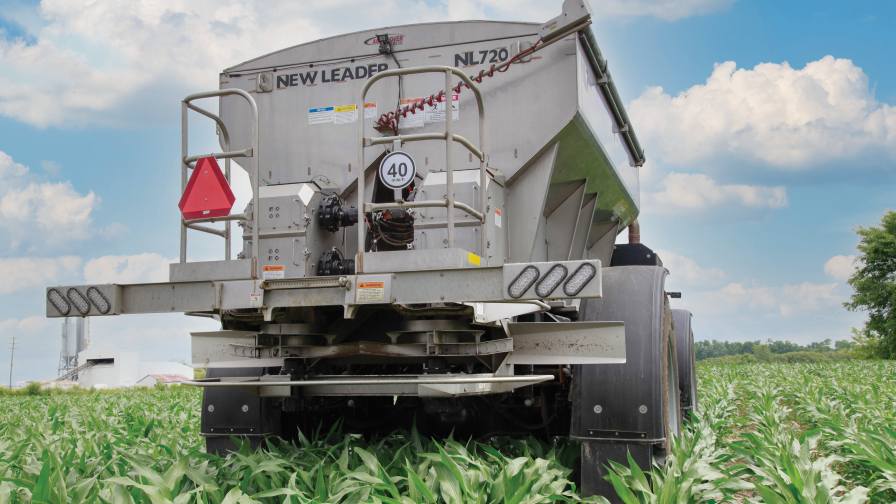
“New spreaders on the market today leverage advanced technology to dramatically boost efficiency and precision, optimizing every pass, says Craig Jorgensen, National Accounts Manager — application equipment for AGCO. “For instance, the New Leader 720 achieves a 120-foot spread width at the same speeds previously required for 80 or 90 feet. This represents a productivity increase of over 30%, allowing you to cover more acres in less time.
“The real intelligence, however, lies in its precision,” he continues. “With 16-section control, the spreader automatically prevents overlap by shutting off sections as it passes over already-covered ground. It also recognizes field boundaries, ensuring fertilizer is only applied where it’s needed, maximizing your crop’s yield potential and minimizing waste.”
The Unverferth Manufacturing Co. added features to improve the operator’s experience.
The company “unveiled the patented Air Command section control system for the Unverferth Pro-Force dry fertilizer spreader lineup,” says Andy Unverferth, Director of Marketing. “This innovative swath control system uses pneumatics to control the flow of fertilizer on to the spinner disks for precise four-section control.”
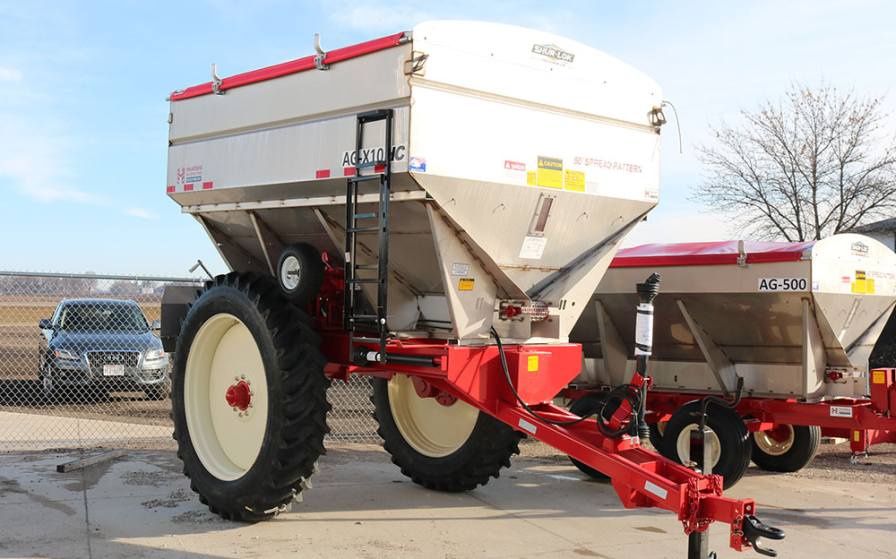
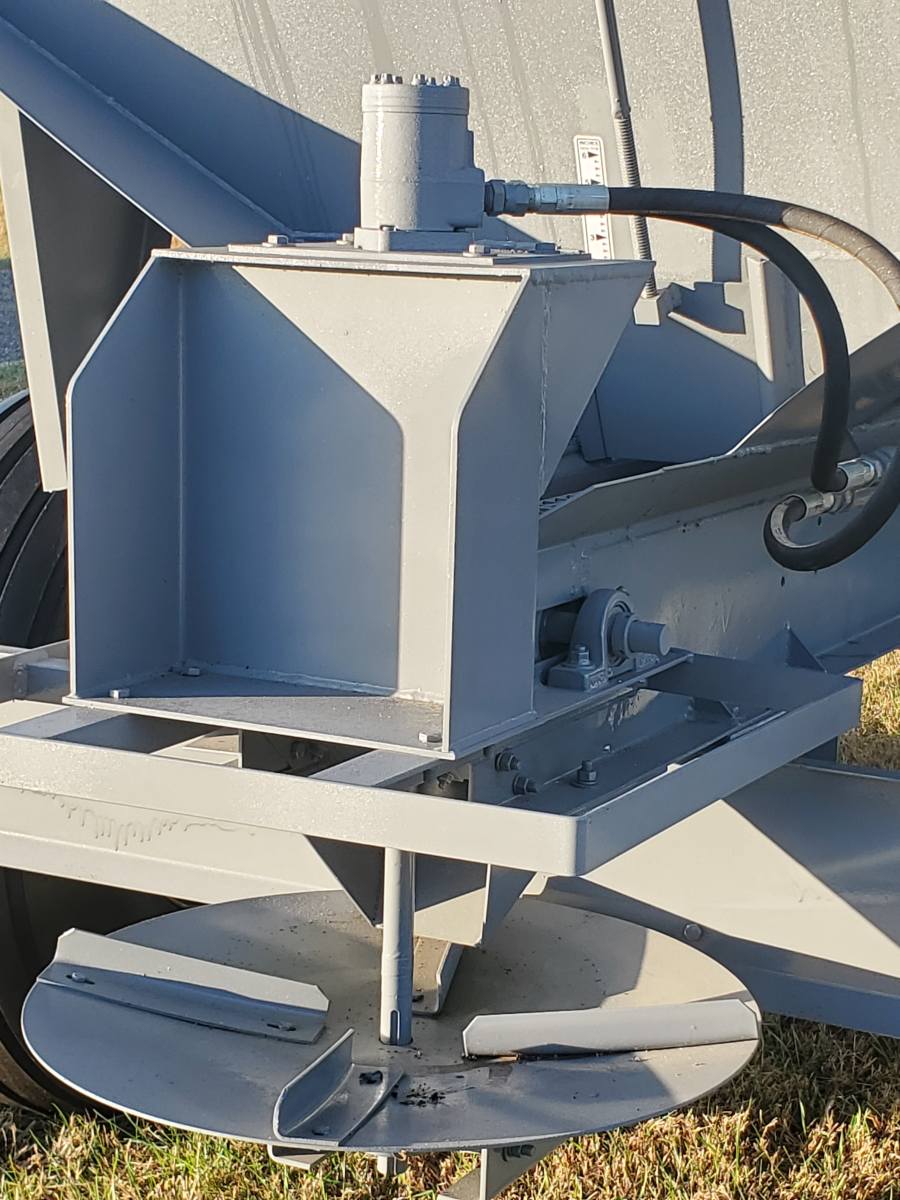
According to Loftness’s McComas, the company’s new product has a “new hydraulic fixed rate drive that is our most exciting new feature on spreaders. It offers the simplicity of a traditional ground drive, but without the chains and sprockets that cause maintenance headaches. It’s ideal for ag retailers who let customers borrow or rent spreaders to apply fertilizer, since it’s easy to operate and eliminates the equipment damage caused when the spreader is transported or backed up with the drive system engaged.”
Opportunities, Challenges
If 2025 didn’t live up to expectations, manufacturers view the new season with hope. Of course, they plan to nudge that hope into reality by taking advantage of a variety of opportunities.
“Increasing OEM contracts and increasing our volume through different channels is a big focus for GVM,” Anderson says.
At Simonsen Industries prospects arise in the form of new features.
“Opportunities for growth in this market segment revolve around continued innovation and customization aimed at providing our customers with exactly the spreader that is right for them at a price that creates a good ROI,” Simonsen says.
Like many other areas of agriculture, manufacturers are looking to provide value.
“As is normal, our customers ideas and suggestions are the main drivers to the changes that we make to our equipment brands,” Simonsen says. “Retailers remain the largest percentage of our spreader customer base; however, individual growers are gaining ground in this mix as they look to add spreaders to their equipment assets.”
That’s an approach shared by a number of the manufacturers.
“The agricultural community is continually researching ways to reduce input costs and boost crop yields to be more profitable,” Unverferth says. “The Unverferth Air Command section control system for the Pro-Force dry fertilizer spreaders helps the operator do just that, by reducing the amount of nutrients applied on the field while maximizing crop yields by placing fertilizer right where it’s needed.”
Like other aspects of ag (and nearly every industry) artificial intelligence (AI) has found its way into spreaders.
Deere, for example, list JDLink modem, StarFire receiver, G5 CommandCenter, AutoTrac RowSense, Vision 2.0 among its offerings.
“These technologies, many of which leverage automation, connectivity, and intelligent systems, are transforming how spreaders operate, helping users maximize uptime, reduce waste, and deliver consistent, high-quality applications,” Deere’s Mulder says.
Despite the opportunities, there are several headwinds that could hinder or at least slow any growth.
“Challenges include lower commodity prices and a saturation of used equipment available on the market,” Simonsen says. “There is a lot of equipment available although, much of it is in poor condition. Breakdowns, repair work, and poor application patterns will cost much more than the amount of money saved on a worn-out piece of spreading equipment. At the price of fertilizer, it does not take long for this to happen.”
No matter what spreader is available, finding the someone to operate it can also be a challenge.
“The shrinking labor pool in the ag industry means low maintenance and ease of use will continue to influence purchase decisions,” Loftness’s McComas says. “Also, the need for proper soil fertility will only increase as farmers continue to push yields higher. Offering precision technologies like variable rate will also drive future growth opportunities.”
Retailers
The retailer’s role can vary, Titan’s Sinclair says. “(It) depends on geography and crops grown in that area. Many retailers still offer pull type spreaders for growers to use, in addition to their custom application of crop nutrients.”
Providing customers with durable and reliable product is key.
“In addition to their custom application services, we work closely with ag retailers who let customers borrow or rent spreaders when fertilizer is purchased through them,” says Loftness’s McComas. “This is a main reason for our focus on durability and ease of use.”
Retailers are key for GVM.
“It is 90% of our market,” Anderson says. “Our Prowler and Double Duty are most utilized in the ag retail market.”