Syngenta expects to invest $68 million in a new office complex in Greensboro, NC.
Tom Mason provides answers as the President of BioProtection Global, a federation of regional associations representing biocontrols around the world.
INFOLIUM-EA is a nonionic surfactant, specifically formulated to bring conventional functionality to an organic surfactant.
The crop inputs industry is undergoing a new green revolution driven by consumers demanding to know more about their food.
Volatility-reducing agents, lower use rates, and innovation in the pipeline signal growth for the category.
The collaboration will leverage AgBiome’s proprietary GENESIS platform that comprises the world’s largest, most diverse, fully-sequenced collection of microbes.
Qalcova active and Jemvelva active headline Corteva’s growing portfolio of sustainable innovations.
Containing picarbutrazox, a novel mode of action, Vayantis reinforces protection against Pythium, one of the leading causes of yield loss in corn.
Lyra combines three technologies into one, designed to improve nutrient availability and utilization and to help with nitrate stewardship.
The problem of insecticide resistance remains, and arguably even getting worse. So, what is going on? Contributing writer Andrei Alyokhin offers up answers.
Soybean yields can now be protected from an adjuvant made from refined soybean oil produced from soybeans grown by cooperative owners.
Getting a handle on grass species now rather than later is a crucial step toward ensuring clean fields and high yields remain a reality.
Herbicide can be used on cereals to provide broad-spectrum control of broadleaf weeds, with improved efficacy against kochia and built-in resistance management.
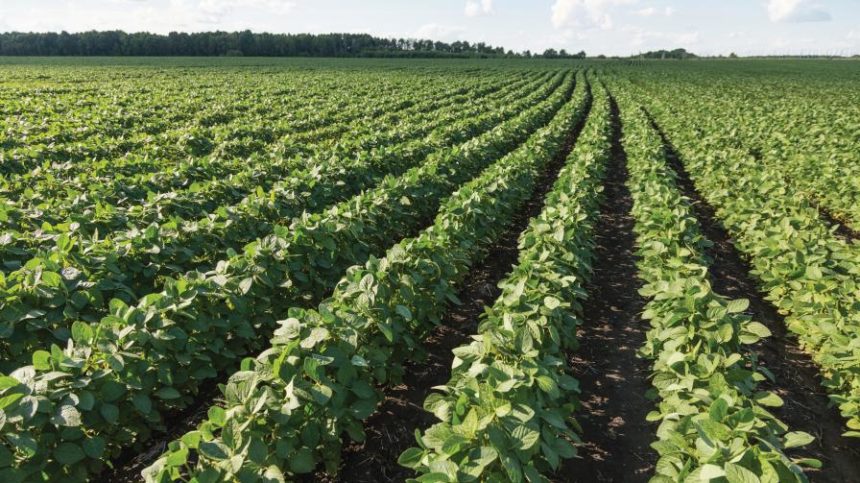
Acuron GT provides enhanced post-emergence control of yield-robbing weeds and longer-lasting residual in glyphosate-tolerant corn.
The pipeline supports the company’s goal to annually increase its sales share of ag solutions with substantial contribution to sustainability by 7%.
DiPel Biological Insecticide has been a leading lepidopteran biological control product growers have depended upon for 50 years.
Thick radish roots are an ideal choice for natural drilling into the soil to reduce compaction while helping to add nitrogen to the soil.
Rynaxypyr insecticide is considered a reduced risk pesticide due to its favorable toxicological and environmental profile.
The company instead is shifting resources to support the Enlist weed control system.