

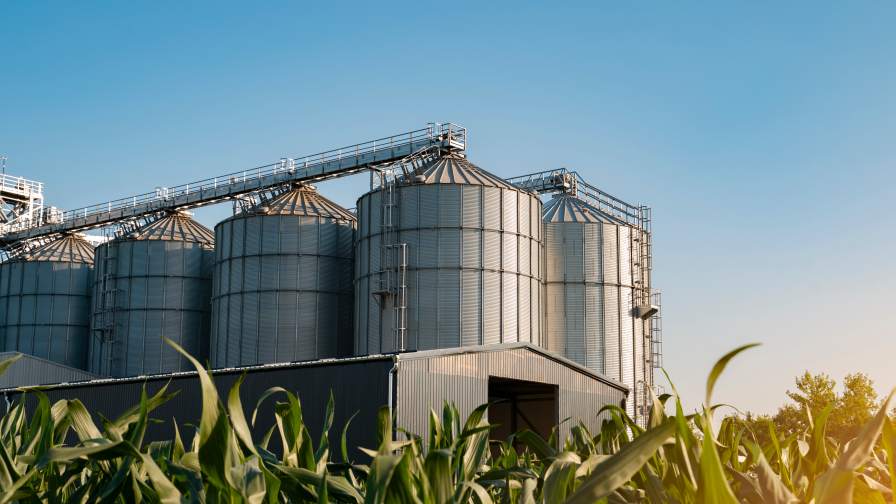
Storing grain provides the flexibility needed to maximize profitability. But without a plan to protect grain quality from insect damage, the cost of storage-related losses can quietly erode, or even eliminate, the gains that come with holding grain longer for higher prices. To help growers and other grain handlers defend the profit potential of their stored grain, Central Life Sciences created the Grain Protection Protocol, a proactive, four-part plan that is customizable to fit any operation with grain storage.
Stored grain insects are a legitimate threat to the quality and volume of stored grain. In fact, Central Life Sciences’ trial data shows that in as little as 30 days, insects can cause a 2.2% dry-matter shrink loss in corn, equating to about 10 cents per bushel. In wheat, stored grain insects are responsible for up to $2.5 billion in lost value every year, according to the United States Department of Agriculture.
“Stored grain insects can create costly problems long before obvious signs of infestation appear,” said Dr. Johnny Wilson, technical services manager at Central Life Sciences. “That is why the most effective grain protection strategies begin before grain ever enters the bin. By taking a proactive approach, growers can help preserve grain quality, protect stored bushels and maintain more of the value they worked hard to produce.”
A proactive Grain Protection Protocol is an impactful, convenient and cost-effective way to address the threat of stored grain insects. Central Life Sciences recommends following a four-part plan that includes:
- Reduce risk and start clean: Conduct a complete bin cleanout and apply a grain protection product to help prevent and control insect infestations before and during grain fill.
- Protect at load-in and lock in value: Defend grain mass and quality by helping to prevent pests from entering the storage process, helping reduce the risk of infestation and working to ensure insect-free grain is stored.
- Store with confidence and preserve quality: Monitor grain condition to help preserve grain mass and quality and capture maximum profit opportunities.
- Maximize return and cash in: Test and inspect grain at load-out and implement reactionary treatment to limit dockage and support clean, market-ready grain at delivery.
“No two grain storage operations are exactly alike, which is why a one-size-fits-all approach is not enough. Every farm has its own unique setup, crop mix, geography, pest pressure, grain marketing timeline and goals that need to be taken into account,” said Wilson. “A customized Grain Protection Protocol can serve as a practical roadmap that can be tailored to an operation and helps reduce risk, respond with confidence and keep stored grain in the best possible condition from load-in to load-out.”
Growers and grain handlers can begin creating their own custom Grain Protection Protocol by visiting GrainProtection.com. After answering a few short questions, users will receive a detailed Grain Protection Protocol tailored to their unique storage challenges.