
Since the glyphosate-resistant marestail plant was discovered in a Delaware crop field in 2001, herbicide-resistant weeds have continued a steady march across virtually every corner of the U.S. Today, almost a quarter of a century from that first find, the International Herbicide Resistant Weed Database reports that there are 534 unique cases of herbicide-resistant weeds globally, with 273 species. In all, weeds have developed resistance to 21 of the 31 known herbicide sites of action and to 168 different herbicides. Herbicide-resistant weeds have been reported in 101 crops in 75 countries.
“There’s been an intensity of weed resistance year-over-year,” observes David Elser, Region Head, North America at UPL NA Inc. “And this has happened not only in the classes of chemistries that weeds have developed a resistance to, but multiple resistances have developed in some really problematic weeds such as waterhemp.”
Travis Gustafson, Agronomy Service Representative at Syngenta Crop Protection, agrees with Elser’s assessment. “The problem of herbicide-resistant weeds is not going away,” says Gustafson. “What we are really trying to do these days is help educate people on developing effective weed management strategies to fight the spread of resistant weeds. We recommend users use full rates and multiple modes of action products in their crop fields.”
Besides these recommendations, UPL’s Elser also says today’s agronomists and growers are not only focused on the adult weeds to help manage resistance, but their seed banks as well. “The idea of managing weed seed banks has become a very hot topic,” he says. “Some weeds can produce up to one million seeds in a growing season lasting from early April to late November. And managing them in the fields isn’t the problem — it’s the ones at the fringes and in ditches that need to be watched. These can easily sprout and spread into the crop fields if they aren’t managed properly.”
The Terrible Two
Although there are hundreds of herbicide-resistant weeds on the planet, U.S. ag retailers and their grower-customers tend to mention two species in particular when discussing the ones that are hardest to control – Palmer amaranth and waterhemp.
“Over the last decade or so, Palmer amaranth and waterhemp have been top-tier huge issues for U.S. agriculture,” says Drake Copeland, Technical Service Manager, Kentucky and Tennessee, at FMC Corp. “In fact, many people in this industry base their whole year around controlling just these two weeds in their fields.”
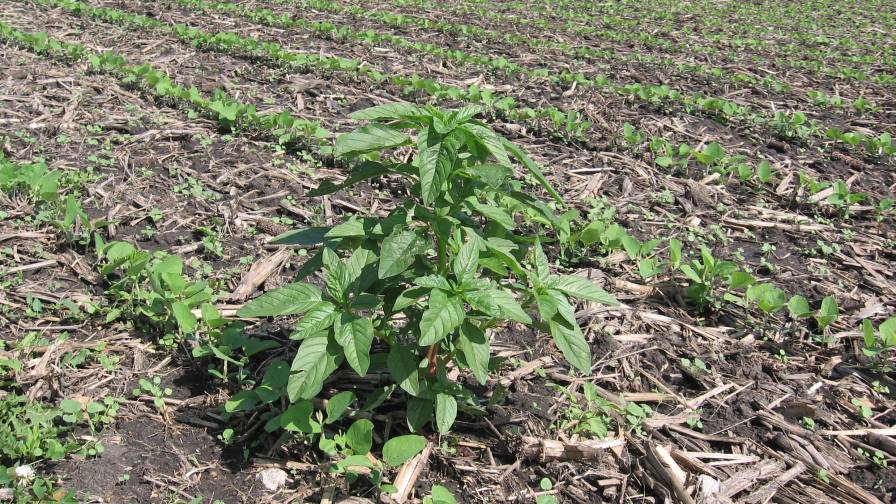
According to Copeland, one of the reasons Palmer amaranth and waterhemp have been so difficult to control has to do with their biology. “Both of these weeds are incredibly prolific,” he says. “The amount of seed each plant can produce in a season is mind-boggling — from half a million to one million per year per plant. And each of these seeds is only the size of a period in a newspaper, so they are easily spread when growers run their equipment such as combines through the field.”
The other reason Palmer amaranth and waterhemp have been so hard to control in crop fields ties back to their incredibly active metabolisms. According to Dr. Cody Gray, Regional Research and Development Head, North America at UPL NA, these weeds can steadily adapt to multiple modes of action within a few growing seasons.
“Right now, in Illinois, there is a population of waterhemp that is resistant to six different herbicide modes of action,” says Gray. “And based upon the research, weed scientists are about to name a seventh active ingredient that won’t control this waterhemp.”
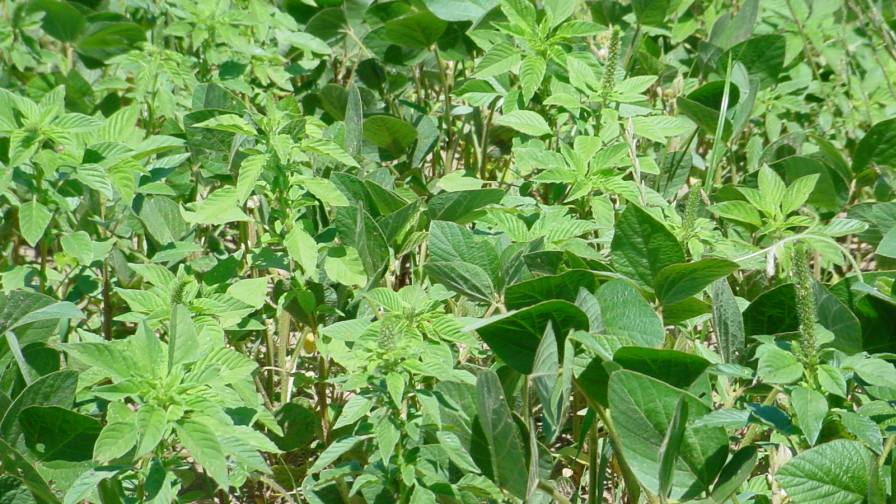
He adds that Palmer amaranth has shown a similar ability to resist numerous herbicides. “There’s Palmer amaranth that has been discovered that is resistant to HPDD, PPO inhibitors, and most recently, glufosinate,” says Gray.
And newer weeds are becoming more problematic. For example, many attendees at the 2025 Commodity Classic show in early March mentioned that their grower-customers were finding kochia harder to control. Traditionally a weed pest out in the Western states, herbicide-resistant kochia has started spreading into many Eastern states over the past few years. In the Mid-South, herbicide resistant Italian ryegrass is becoming a bigger issue.
“Italian ryegrass control is a struggle these days,” says FMC’s Copeland. “That’s one we are starting to lose mode of actions to manage. The latest is resistance to paraquat.”
Help Today
To combat these quickly evolving weeds, many crop protection product manufacturers have introduced new herbicide options in recent years. Several such brands appeared in time for the 2024 growing season.
One of these is Storen from Syngenta. A combination of four residual active ingredients — bicyclopyrone, mesotrione, S-metolachlor, and pyroxasulfone — Storen can deliver clean rows up to three weeks longer than other leading corn herbicides, says Gustafson.
“Storen is labeled for preemergence and post-emergence in field corn and seed corn and has partial control, or control, of more than 74 weed species,” he says. “This includes control of Palmer amaranth, waterhemp, kochia, common lambsquarters, morningglory, Giant ragweed, common ragweed, and annual grasses.”
Corteva Agriscience introduced a trio of new herbicides recently. First was Enversa. An encapsulated acethochlor, Enversa can be used to help control 25 broadleaf and grass weeds, including Palmer amaranth and waterhemp.
At the 2025 Commodity Classic show, Corteva introduced the market to two other herbicides — Kyber Pro and Sonic Boom. “At Corteva, it’s our job to help soybean growers overcome the challenges of the shifting weed control landscape, and Kyber Pro and Sonic Boom herbicides will do just that — offering diverse modes of action and several weeks of residual control in convenient premix formulations,” says Drake Robards, U.S. Product Manager, Soybean Herbicides. “By starting the season with one of these two preemergence solutions, growers give their soybeans a clean start for optimal growth. Sonic Boom delivers strong performance against many of the key hard-to-control and resistant broadleaf weeds, such as waterhemp and Palmer amaranth, that soybean growers face today. Kyber Pro also delivers premier weed control of many of the same broadleaf weeds as Sonic Boom, plus has a Group 15 active for additional control of grass weeds.”
Kyber Pro herbicide contains three proven modes of action — metribuzin, flumioxazin, and pyroxasulfone. According to Robards, the three modes of action create a solution for control of more than 50 broadleaf and grass weeds, including ALS- and PPO-resistant weeds like Palmer amaranth and waterhemp.
“Sonic Boom herbicide offers two powerful modes of action — metribuzin and sulfentrazone — for effective weed control plus superior crop safety for higher yield potential,” he says. “The solution is especially effective against difficult resistant broadleaves, including waterhemp, Palmer amaranth, marestail and kochia.”
For the 2025 growing season, BASF is introducing Liberty ULTRA herbicide. Containing the active ingredient glufosinate-P-ammonium, also referred to as L-glufosinate ammonium, Liberty ULTRA is a new post knockdown solution is effective on both broadleaves and grasses and is available for use on glufosinate-enabled soybean, cotton, corn, and canola acres.
“As farmers increasingly rely on glufosinate in their weed management programs, the demand for enhanced efficacy and efficiency of this herbicide is more apparent than ever,” says Matt Malone, Product Manager at BASF Agricultural Solutions. “With a narrowing number of effective knockdown tools in the U.S., BASF’s latest innovation, Liberty ULTRA herbicide, will offer American farmers a post knockdown tool that delivers improved performance and convenience thanks to the new Liberty Lock formulation and BASF’s patented Glu-L Technology.”
From UPL comes INTRAVA DX herbicide. Containing amicarbazone, an active ingredient that is new to the corn market and has no known resistance issues, INTRAVA DX also contains metribuzin. According to Gray, these two Group 5 herbicides feature 30-plus days of residual control against many difficult-to-control weed populations, including broadleaf species such as common ragweed, velvetleaf, and common lambsquarters.
“While resistance in glyphosate-tolerant crops is well-known, populations of atrazine and HPPD-resistant weeds also have expanded throughout the Corn Belt to rob growers of productivity and yield potential,” he says. “INTRAVA DX herbicide gives corn growers back control over atrazine and HPPD-resistant amaranthus species such as common waterhemp and Palmer amaranth.”
Still to Come
Looking beyond the 2025 growing season, there are several new herbicides awaiting EPA approval before making their market debuts. One of these is Convintro from Bayer Crop Science. Containing the active ingredient diflufenican, Convintro is a Group 12 herbicide (inhibiting pigment synthesis) that has been used in wheat in Europe for several years now.
“There wasn’t really a reason to bring this product to the U.S. until now,” says Dr. Dominik Hoffmann, North American Product Manager, Herbicides. “But there certainly is now.”
In practice, Hoffmann says Convintro should be paired with a Group 15 herbicide. “This way, it can combat some of the more troublesome resistant weeds such as waterhemp,” he says.
Another new herbicide likely to debut in 2026 is Rapidicil from Valent U.S.A. A PPO inhibitor, Rapidicil can help control broadleaf and grasses, says Pat Clay, Product Development Manager, Herbicides.
“Rapidicil is rapid, hence its name,” says Clay. “And it works a little differently to fight weeds than other Group 14 herbicides, with more systemic activity. Right now, it has approval for use in Argentina, but we anticipate U.S. approval will happen in time for the 2026 growing season.”