Smart Tech
Smart Technology, Smarter Fertility
 July 29, 2026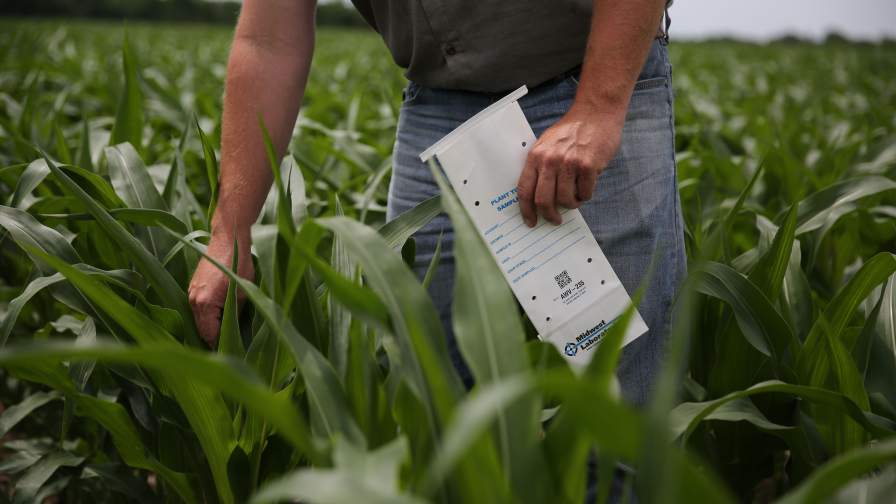
One of the ways ag retailers can gather field information in the AgroLiquid initiative is through tissue sampling.

Across the whole of the agricultural world today, the steady rise of fertilizer costs has dominated much of the discussion. But one company, AgroLiquid, is taking a proactive approach to this problem, leveraging smart technology to do so.
“This all started with a simple question on our part,” says Ryan Harbison, Agronomist for the Northeast Region. “How do we get more precision-oriented with some of our fertility?”
With this question in hand, Harbison says AgroLiquid began taking an in-depth look at where today’s fertility dollars are being spent by ag retailers and their grower-customers through a series of field trials.
The first place the company focused on was the planter.
“We wanted to have a better picture of what kinds of fertility products were going through these planters and why they were important,” he says. “This represents a significant investment for the grower to make each and every growing season.”
Read More About AgroLiquid
Next, AgroLiquid factored in one of the primary goals of the grower world: Crop yields. “How can we get high yields using fertilizers but still maintain a strong return on investment?” says Harbison. “Eventually, these efforts morphed into how precise can we get with our placements of fertility? That’s when precision technologies came into the mix.”
For its field trials into this question, Harbison says AgroLiquid employed many newer precision application technologies. This included conducting field imaging through the use of satellites and in-field drones. The data was then paired with in-season field applications of crop nutrition products using more drones.
“Nobody wants to run a high-clearance sprayer over tasseled corn, so using drones makes the most sense for this kind of application work,” he says. “By using all this data and the drones, we can help the customer look at how they are applying things such as phosphorus differently, being more targeted in where it is applied and when.”
Overall, says Harbison, AgroLiquid has been able to see a clear financial advantage to customers taking this approach. In fact, in the company’s field trials of the program, in-season precision applications were shown to generate more than a $10 per acre return.
Looking at today’s agricultural environment, it’s clear why an initiative to stretch fertility dollars at the farmgate is appealing to the market. For at least the past two years, overall crop nutrition prices have increased more than 100% in many product categories. Indeed, a recent survey of growers by the Farm Bureau found that 70% of respondents said that they were unable to afford to purchase all the fertilizer needed for the 2026 growing season due to higher-than-expected costs.
In Harbison’s mind, this is a major reason for AgroLiquid’s effort to help customers be more precise with their fertilizer applications.
“It’s about bringing some more control into the equation,” he says. “By its nature, the growing season is very dynamic. We never know in the fall what the next spring will be for things such as weather or insect pressures. When I worked in ag retail and told my grower, ‘We are going to put this fertility plan into action,’ there tended to be a ton of variables I couldn’t account for. But if we can be more precise with our recommendations on fertility, it becomes a controllable lever.”
The Retailer’s Role
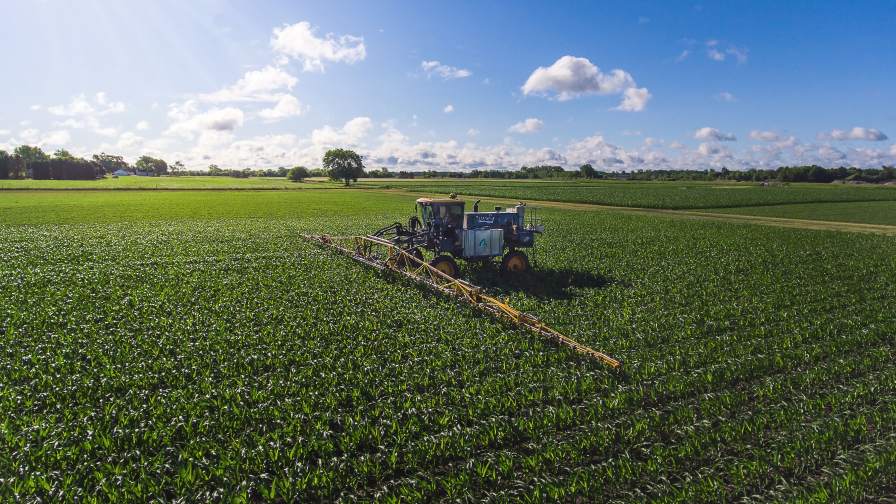
Using the AgroLiquid program, customers can coordinate data between equipment, including sprayers.
For ag retailers, Harbison says a precision-oriented fertility program such as AgroLiquid provides multiple new touchpoints to help their grower-customers.
“It can give retailers more information to help their growers be more efficient on their farms when using fertilizer,” he says. “Many people probably remember growing seasons like 2012, when severe drought depressed crop yields and upended many fertility programs throughout the year. Also, many ag retailers sell the precision equipment that is used in this program, so this represents another knowledge play for them, too.”
One believer in the program is Johnathan Diaz, a retail partner and grower in Stanberry, MO, who has used AgroLiquid products for almost a decade now. Diaz says the need for initiatives such as AgroLiquid’s is critical in today’s ag world.
“With the uncertainty of high-priced fertilizer, we’re always looking for ways to make every fertilizer application count,” he says. “AgroLiquid products have given us the flexibility and precision to match nutrients to crop demand, helping us maximize efficiency and improve overall crop performance. It’s become an important part of our fertility program.”
Before incorporating AgroLiquid’s fertility program into their operations, the company’s Harbison recommends ag retailers ask the following questions:
What are my grower’s normal fertility practices? Considerations here include what kinds of technologies are available in the marketplace, whether the customers are doing custom application work, and whether the grower has starter application equipment on their planters.
How many passes is the grower typically making through the field for fertilizer application?
What are the market conditions like, and given these, will the grower be comfortable with investing in such a program?
“Each retailer partner will be different in these respects,” says Harbison. “But if the answer to these questions is yes across the board, then the program might be a good fit.”

For more Smart Tech topics, click here.
Subscribe Today For
