Advertisement · Billboard Skin · 1920×350, 1920×150 on scroll · Hidden until filled

Persist PAF Liquid Soil Enhancer Earns USDA-Certified Biobased Product Label

Potato Field
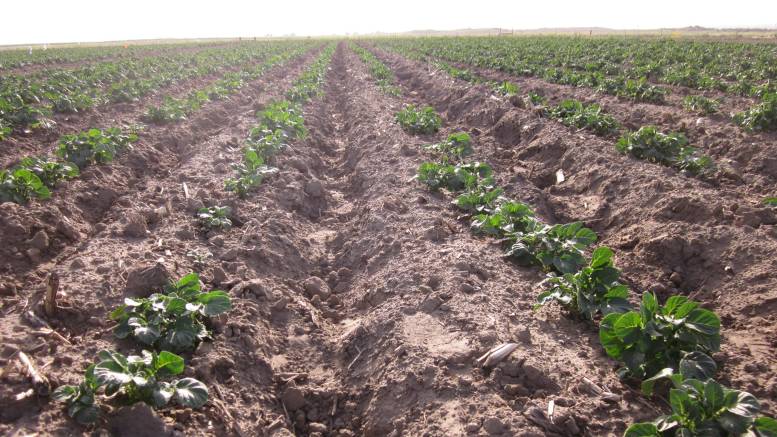
Potassium and potatoes: Understanding fertilizer crop interactions The timing of fertilizer application impacts chloride uptake by the crop March 22, 2023 – For farmers and researchers, a field is often like a giant chemistry set. The timing and amounts of different fertilizers to supply nutrients can interact with each other, the soil, and crops. For example, potassium, an essential macronutrient for crops, is often applied to a field in the form of potassium chloride. Potassium and nitrogen are the two nutrients that crops need in abundance. Past research has documented an uptake between chloride and nitrate, a form of nitrogen that crops take up. In crops like potatoes, which are high in potassium, chloride and other salts have been shown to reduce what is called tuber specific gravity. Specific gravity is a quality evaluation metric used by the potato industry and higher specific gravity increases crop value. A lower tuber specific gravity means a potato will hold more water. While many potatoes are sold to make foods like french fries, more water in the potatoes means more time in the fryer to become crispy. Not only is this more expensive, but the fries may also absorb more fat during frying. Sarah Light, an agronomy farm advisor with University of California Cooperative Extension, led a study on the timing of potassium chloride in potato fields. Her work was published in Agrosystems, Geosciences & Environment Journal, a publication of the American Society of Agronomy, and Crop Science Society of America. In the study, the researchers applied three different potassium fertilizers at three different application times during the season. Potassium chloride is the most common and inexpensive potassium fertilizer. They also used sulfate of potash and sulfate of potash magnesia. They applied these fertilizers to different research plot 210 days before planting (fall), 14 days before planting (spring), and 35 days after planting. They found that the fall application did not increase chloride in the plants. The researchers believe that this is because the chloride was leached below the root depth by the time the potatoes were planted 210 days later. However, the potassium was left in the soil to be taken up and used by the potatoes as they grew. “Fertilizers are soluble salts and leaching is the process of draining salts from the soil,” Light explains. “Especially in low rainfall areas, high salt content in the crop rootzone, known as soil salinity, is a top reason that fields can become unfarmable.” Although they did find higher chloride in some of the aboveground parts of the potato plant from spring and in-season applications, it did not greatly impact nitrogen levels. They also found no significant difference in yield or quality — such as specific gravity — between the three fertilizer timings in their specific study. The study indicated that chloride accumulates more in the stems and leaves of the potato plant, and not in the potatoes themselves. However, after potatoes are harvested, the stems and leaves are left in the field. The chloride isn’t removed from the field and may increase the risk of elevated chloride in the soil for future seasons. In this study, chloride leached below the rootzone when applied in the fall. “Potato plants will take up chloride when it is available and chloride will accumulate in plant tissue until potato harvest,” says Light. “Though specific gravity was not affected by treatment in this research, if elevated plant chloride is of concern, applying potassium chloride in the fall is a way to reduce chloride uptake. This is because it has time to travel, or leach, deeper into the soil.” Light, who conducted this research while a graduate student at Oregon State University, says that she and her team were pleased to find that chloride can travel below the potato root zone, even in a low rainfall area. This provides a way for farmers to minimize risk of lower quality potatoes. “Optimizing our fertilizer applications is always a high priority in agriculture,” Light says. “It’s important to understand plant, soil, and nutrient dynamics in order to continue to optimize our production systems and improve our efficiencies.” The research was funded by the United States Department of Agriculture’s National Institute of Food and Agriculture, with support from Compass Minerals. Don Horneck, Oregon State University Extension Agronomist, began this project before passing away in 2014. Dan Sullivan, also with Oregon State University, worked with Sarah Light on this project from 2014 onward. Photo Caption: Potatoes emerging in mounded rows at the study site in Hermiston, Oregon. The study focused on examining the timing of potassium chloride absorption in potato fields. After potatoes are harvested, the stems and leaves are usually left in the field. This can increase the risk of elevated chloride in the soil, but is avoided by applying potassium chloride in the fall. Photo credit: Sarah Light

VGrid Energy Systems, a California-based clean energy producer, announced it has earned the U.S. Department of Agriculture (USDA) Certified Biobased Product Label for its Persist PAF liquid plant and soil enhancer.

Persist PAF is a unique blend of organic acids and natural compounds. Academic research and multiple field trials support the role PAF can play in significantly enhancing plant growth and crop yields. Beneficial soil microbes use organic acids in PAF for their metabolism, resulting in increased diversity and population. Additionally, the organic acids in PAF, such as malic and acetic acid, have also been shown to solubilize and mobilize minerals such as iron, phosphorous, potassium, and magnesium. These organic acids form complexes with soil minerals to release previously unavailable nutrients for plant growth and development.

PAF packaging will display a unique USDA label highlighting its 100% biobased content. Third-party verification for a product’s biobased content is administered through the USDA BioPreferredÒ Program, which strives to increase the development, purchase, and use of biobased products.

The USDA Certified Biobased Product Label displays a product’s biobased content, which is the portion of a product that comes from a renewable source, such as plant, animal, marine, or forestry feedstocks. Utilizing renewable biobased materials displaces the need for non-renewable petroleum-based chemicals. Biobased products are cost-comparative, readily available, and perform as well as or better than their conventional counterparts.

“Displaying the USDA Certified Biobased Product Label validates the quality of our product and serves as a strong endorsement to consumers, especially those actively seeking biobased alternatives over synthetic and fossil-fuel based fertilizers. We’re thrilled to be recognized,” said Jeff Norton, Vice President of Business Development at VGrid Energy Systems.

“We applaud VGrid for earning the USDA Certified Biobased Product Label,” said Vernell Thompson, USDA BioPreferred Program. “The label is intended to help spur economic development, create new jobs, and provide new markets for farm commodities. But the label also makes it easier for consumers and federal buyers to local biobased products and consider planet-friendlier options during purchase decisions. By having their products become USDA Certified Biobased, VGrid joins an expanding list of businesses combatting inaccurate marketing claims and the practice of greenwashing, while also contributing to a thriving bioeconomy that decreases our reliance on petroleum.”

In the latest Economic Impact Report released by USDA, the biobased products industry supported 4.6 million American jobs; contributed $470 billion to the U.S. economy and generated 2.79 jobs in other sectors of the company for every biobased job. Biobased products also have a substantial environmental impact, displacing about 9.4 million barrels of oil a year, with the potential to reduce greenhouse gas emissions by an estimated 12.7 million metric tons of CO2 equivalents per year.


Matt Hopkins Avatar

Written by

Senior Online Editor, CropLife