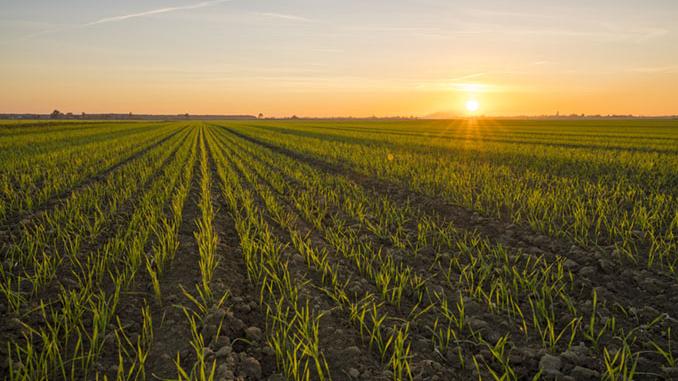
Fields across Montana may be under-fertilized if fertilizer rates were based on drought conditions, since snow and rain this spring increased potential yields in some areas, according to Clain Jones, a soil fertility specialist with Montana State University Extension.
Jones said that this year, producers may have fertilized less because of very high fertilizer costs combined with early-season drought. But, with recent rains in some areas, there may not now be enough of certain nutrients in the ground for optimum yields. While drought is still a significant concern in much of Montana, precipitation in April and May was average to above average in about two-thirds of the state. Notably, April to May precipitation ranged from more than 2 inches below normal in areas of north central Montana to more than 8 inches above normal in parts of south central Montana.
“There are a few factors that producers should consider when deciding whether to add additional fertilizer,” said Jones, who is also a professor in the MSU Department of Land Resources and Environmental Sciences. “The first consideration would be whether yield goal increased with spring precipitation. If yield goal increased more than about 8 bushels per acre, for most grain crops, additional nitrogen fertilizer might be worthwhile.”
A yield goal increase of 8 bushels per acre for winter wheat would be expected with 2 inches of additional precipitation and require another 20 pounds of nitrogen per acre, Jones said. Spring wheat would require somewhat more nitrogen.
Read more at Montana State University News Service.