Ag retailers have invested considerable time and resources in precision agriculture technologies, helping growers collect more data and make increasingly sophisticated field management decisions. But having access to the technology doesn’t necessarily mean farmers know how to use it to its full potential.
For retailers, that creates an opportunity to provide something technology alone cannot: personal guidance.
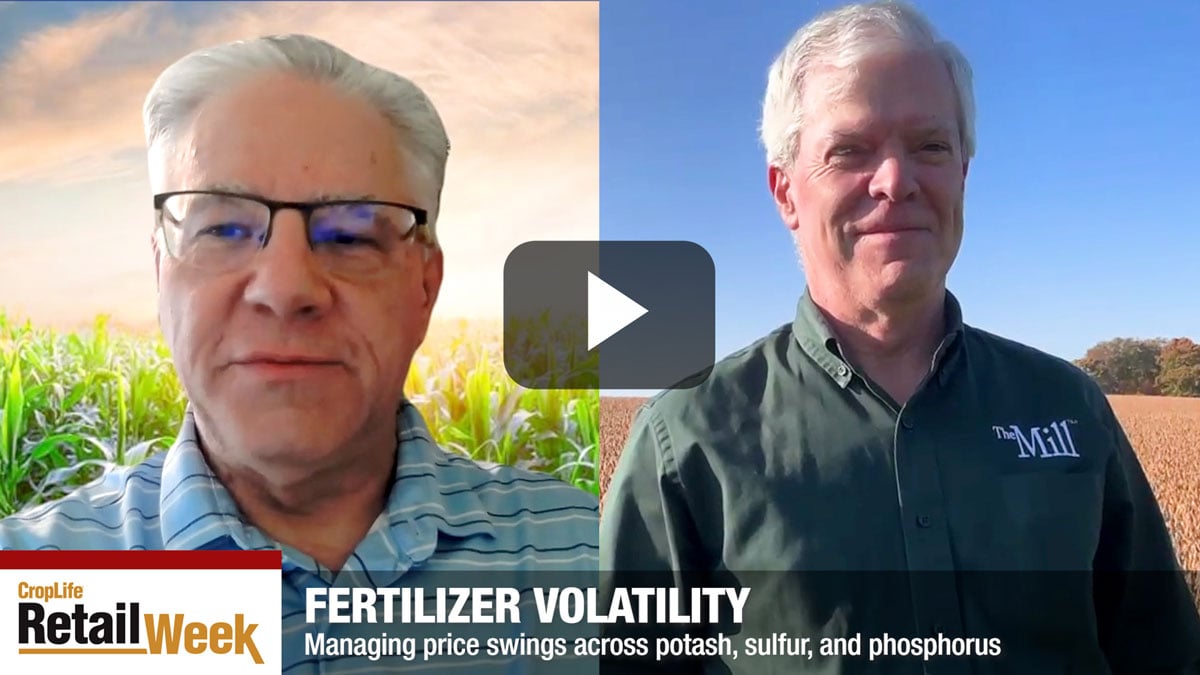
That was a key topic of discussion during a recent episode of CropLife Retail Week featuring Ben Hushon, a Certified Crop Advisor with Maryland-based The Mill. Hushon explained how the company has made helping growers understand and apply precision agriculture technology a central part of its agronomic services.
His experience offers some valuable lessons for other retailers looking to increase precision ag adoption among their customers.
Moving Beyond Data Collection
The Mill began taking a more serious approach to precision agriculture about nine years ago, initially working with a nitrogen modeling program called Adapt. The company wanted to help growers understand the technology while determining how effectively it could support agronomic decisions.
That effort eventually led to the launch of Decision Ag Solutions in 2021. As part of the initiative, Hushon’s son transitioned from an agronomy position into a full-time role focused on helping farmers make better use of their precision agriculture data.
The move came after Hushon recognized a recurring problem: Growers were collecting plenty of information but weren’t necessarily using it to make decisions.
“I just kept looking at these three-ring binders of yield maps and going, ‘So what? What in the world are we doing with it?’” Hushon recalled.
The goal became helping farmers take the data they already possessed and translate it into practical agronomic recommendations.
“We just kept seeing over and over guys have yield maps in a three-ring binder,” he said. “Then they’d go to a field day somewhere, walk a corn trial and make decisions.”
Rather than relying primarily on information from university trials or other farms, The Mill wanted to help growers evaluate their own field histories and use that information to make decisions specific to their operations.
Meeting Farmers Where They Are
One important lesson The Mill has learned is that precision ag adoption doesn’t have to begin with an expensive equipment upgrade or a complicated technology package.
Hushon said the company works with growers at different stages of their precision ag journeys. Some may be interested in nitrogen modeling, while others already have yield monitors and GPS capabilities that simply haven’t been fully utilized.
“We’re going to help you get them calibrated,” Hushon said of working with growers who have yield monitors. “We’re going to sit down, comb through your data.”
From there, the company can help farmers explore more advanced applications, including variable-rate fertilizer and variable-rate seeding.
Hushon noted that many growers already own equipment capable of performing these functions. The challenge is often getting the technology activated and helping farmers understand how to use it.
He also pointed out that smaller farms can benefit significantly from these capabilities. In The Mill’s Mid-Atlantic territory, a typical 10- to 12-acre field may contain at least three different soil types because of the region’s rolling terrain.
That variability creates opportunities for more precise nutrient and seeding decisions, even on relatively small fields.
The Value of One-on-One Support
For Hushon, one of the biggest opportunities for ag retailers is helping farmers overcome the learning curve associated with new technology.
He recognizes that farmers are busy managing their operations and may not want to spend valuable time sitting in an office trying to figure out equipment settings or software platforms.
“Farmers are smart, but it’s whether they want to give up time farming to sit in the office to learn this technology,” he explained.
That’s why The Mill emphasizes individual conversations and hands-on assistance rather than relying solely on large group meetings or product demonstrations.
Hushon compares the experience to learning how to use a smartphone.
“You had friends or family that kind of coached you through it,” he said. “And that’s sort of what we’re trying to do.”
For retailers, this approach reinforces an important point: Technology adoption is often as much about customer support as it is about the technology itself.
Looking Ahead: AI and Technology Integration
The personal-touch approach doesn’t mean The Mill is ignoring emerging technologies. In fact, Hushon sees artificial intelligence playing an increasingly important role in the company’s precision ag efforts.
One challenge facing growers is that different equipment manufacturers and technology platforms don’t always communicate effectively. Farms may operate planters, combines, and other equipment from multiple manufacturers, creating additional work when trying to connect and analyze their data.
The Mill is exploring ways to use AI to help streamline those connections.
“We’re trying to make it less human-labor-intensive and let the humans oversee the results that come out of it a little more,” Hushon said.
For ag retailers, the opportunity is to combine technological advances with the agronomic expertise and personal relationships that help growers put those tools to work.
Want to hear more from Ben Hushon? Watch the full episode of CropLife Retail Week for additional discussion about The Mill’s Decision Ag Solutions program, AI and precision technology integration, changing grower purchasing decisions, fertilizer inventory management, financing, and the outlook for the 2027 growing season.