
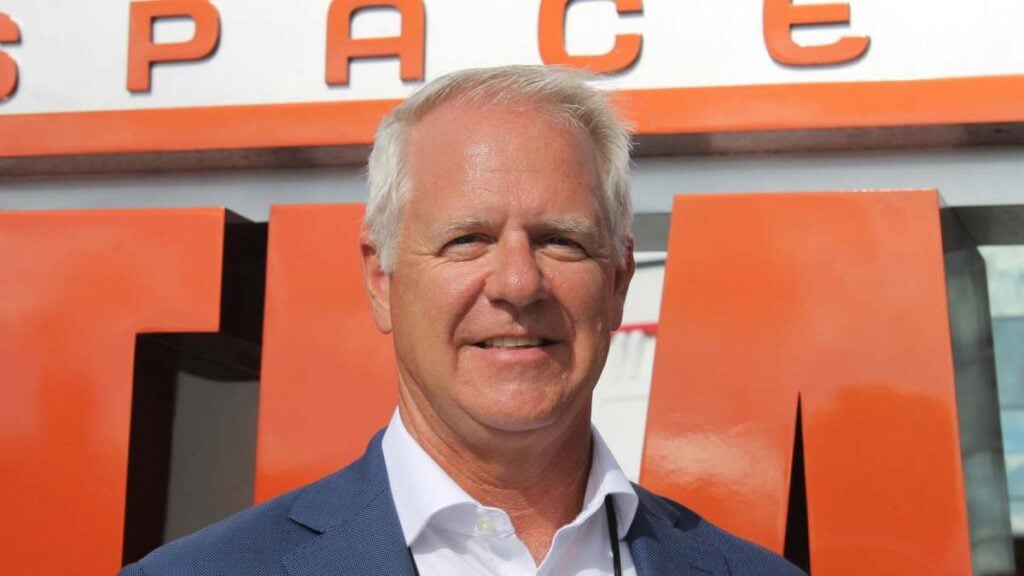
On October 1, Jeff Cecil was named President, North America Crop Protection at Syngenta, succeeding Vern Hawkins. At the 2026 Syngenta Media Summit in Orlando, FL, CropLife Magazine Editor Eric Sfiligoj sat down with Cecil to discuss the overall agricultural marketplace and his plans for the crop protection/seed giant moving into the 2027 growing season.
CropLife: As you step into your new role at Syngenta, what do you believe are the key market strengths the company possesses?
Jeff Cecil: I think our key market strengths at Syngenta are these. Number one, we have a product portfolio that is second to none. Our product pipeline is more developed and invested in than any other company in the industry.
Number two, we are very proud of the fact that we continue to invest at strong rates. These are higher than any of our competitors, to bring new products to the market, and we will continue to do this going forward.
Number three would be our teams. Our people on the ground and in the field are all working hard to deliver on promise of providing our customers with best-in-class service.
CL: Turning that question on its head, what are some of the areas of weakness or places you would like to see improvement?
JC: Every company should be striving for improvement. We at Syngenta certainly have opportunities to improve upon our cost position. We have improvement opportunities around continuing to invest in the future. Innovation takes so many different forms and if we are not listening to our customers, we are not necessarily investing in the innovation that’s most needed.
So, I think we need to make sure we are listening well and taking the clues from the market to continue to where it’s most needed.
CL: What’s the early outlook for 2027 for the crop protection market and Syngenta?
JC: I think the 2027 view from the market is that there will be continued pressure on costs. I think everyone in the industry will see costs that will continue from what we had in 2026. Maybe they might show up in different places, but the market will see those cost pressures continue to be a challenge.
I think another challenge will be around the competitive nature of our industry and making sure companies such as Syngenta are not “racing to the bottom.” Instead, we need to keep looking for value in what we are doing to deliver value to the grower’s needs.
From a Syngenta point of view, we need increased competition. We need our ag retailers and distributors to be able to deliver on the grower needs. These customers should have all the options available to them.
On this, my philosophy is pretty simple: If my products don’t show you enough value that you want to put them on your shelves, then I’m not doing my job.
CL: How is Syngenta marketing biologicals to the industry?
JC: I think our model with biologicals is simply that we want Syngenta’s products to be additive to the opportunity in the field. In other words, if biologicals are helping to enhance the crop yield or pest control, we should be adding to the opportunity for the grower in that way through the biologicals. I don’t see them as replacements to traditional products as a whole. There are places where that approach could make sense.
The bigger piece for me on biologicals is being validated with proven products and modes of action that are repeatable, predictable, and having an opportunity to offer value beyond what the customer would achieve without using them.
CL: So, beyond your goals for 2027 for Syngenta, when you decide to step aside, what would you hope would be your lasting legacy on the company and the industry?
JC: Given that question, looking at 2027 is easier to consider. Next year will be all about the transition now taking place in the market and helping people understand that we are not a company that’s looking to make broad sweeping changes. Syngenta is a company that has been very successful for a very long time at creating value for growers. That is my primary goal for 2027. We might make tweaks based on the feedback from customers and how we might need to address some market concerns, but there will be no broad sweeping changes in what we do and how we do it.
For the longer term, the legacy that I hope to provide is that Syngenta will stay best-in-class in developing its people so that they can be the next wave of leaders for the organization and the industry as a whole. I also want Syngenta to stay as the best-in-class in developing meaningful products for our customers and we continue to influence the industry for the changes that might be needed across the regulatory bodies that are helpful to growers to outperform in markets around the world.