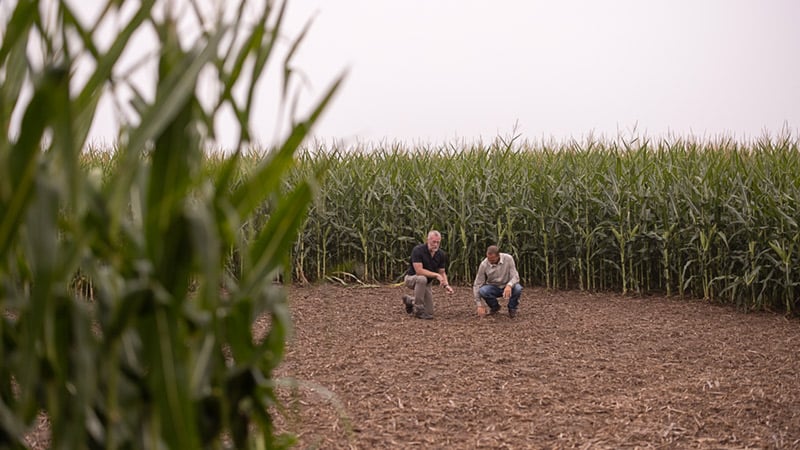
Beyond tracking yields, harvest season can also serve as a crucial window for ag retailers to evaluate the success of their weed control recommendations.
Unfortunately, weed escapes may have been common in many fields this season. With favorable field conditions and increasing resistance, weeds such as waterhemp and Palmer amaranth have been especially unwelcome and easy to spot in corn and soybean fields.
While it can be frustrating to see those weed escapes, it’s also an opportunity for learning and improvement. Retailers can use what they see in the field to identify ways to strengthen recommendations for the following season, looking at the portfolio of options throughout the growing stages and incorporating new products that address specific weed pressures.
Identifying which weeds broke through, when and why.
Begin by identifying the weed species present, noting where the escapes are in the field and estimating when they emerged.
Take note of details that can refine your weed control recommendations:
- Are escapes concentrated in areas with a history of heavy weed pressure?
- Are they primarily grasses or broadleaves?
- Are they occurring in patches, across entire fields, or in areas with specific soil or cropping characteristics?
Most importantly, consider if weeds survived a herbicide application or emerged after the program’s residual activity diminished.
Those observations can help determine whether the issue may involve application timing, product selection, residual performance, environmental conditions, weed density or herbicide resistance.
Review the entire management program — not just individual products.
Instead of focusing on whether a particular herbicide worked or failed, evaluate a weed control program as a system by thinking through pre-emergent, post-emergent and burndown applications.
Pre- or even at-harvest scouting is a good time to revisit how products were layered, whether multiple effective modes of action were incorporated, and whether residual control was suitable for the field’s weed spectrum and expected emergence patterns.
That assessment also reveals opportunities to introduce new chemistry at different timings to boost residual, reduce weed escapes and battle resistance.
Expand the portfolio of product options and manage for resistance.
Fortunately, new herbicides help retailers address gaps in their programs and proactively address weed challenges.
One prevalent issue causing escapes in many cornfields is increasing atrazine and HPPD resistance — which is robbing growers across the Corn Belt of productivity and yield potential.
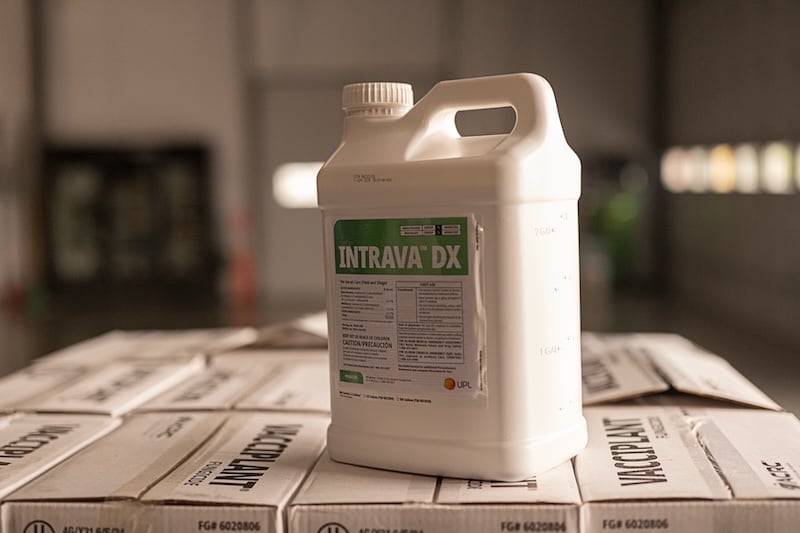
If signs point to resistance in corn acres, consider incorporating a new active ingredient or new mode of action into the program. Intrava® DX herbicide from UPL Corp is a new pre-emergent herbicide containing amicarbazone, the first new active ingredient in corn in nearly a decade. Intrava DX has demonstrated strong residual efficacy on the toughest atrazine and HPPD-resistant weeds — weeds such as waterhemp and Palmer amaranth, as well as other key broadleaf weed species. A strong pre-emergence residual is key to increasing the effectiveness of your post-emergence pass.
To tackle this type of weed pressure in growers’ fields next season, consider adding a product like Winger™ SC herbicide into your pre-emergence or post-emergence program next year. It’s a differentiated solo pyroxasulfone product formulated as a more flexible, reliable way to suppress weed flushes of waterhemp and other broadleaf weeds and annual grasses.
If boosting post-emergence control is an area to target next season, Brovido™ SC herbicide is a new, broad-spectrum, post-emergent weed control option with an ultra-low use rate compared with competitive HPPD products. It provides control of tough broadleaf weeds such as waterhemp and Palmer amaranth as well as better grass control of foxtail, barnyardgrass, crabgrass, millets and signalgrass.
Finally, if you need an alternative burndown solution, Ignatia™ SC herbicide is a versatile burndown option that easily fits into a range of weed control programs for corn, soybeans and wheat — featuring fewer crop rotation restrictions and a low use rate for broad-spectrum control of weeds and grasses.
Improve weed control next season with proactive conversations.
Every weed escape can be a data point for improvement. Using this year’s observations can refine next year’s recommendations and shift grower conversations from what went wrong to what we’ll do differently.
Leveraging that kind of field-level learning can make weed control recommendations more precise —helping growers enter the next season with a program designed around getting ahead of challenges that their fields already demonstrated.
For more information about incorporating Brovido SC, Ignatia SC, Intrava DX or Winger SC herbicide in your weed control program recommendation, talk to your local UPL representative or visit uplcorp.com/us.
Always read and follow label directions. UPL, the UPL logo, Brovido, Ignatia, Intrava and Winger are trademarks of a UPL Corporation Limited Group Company. Brovido SC, Ignatia SC, Intrava DX and Winger SC herbicides may not be registered for use in all states, please check with your local retailer or UPL representative for details. ©2026 UPL Corporation Limited Group Company. UPL NA Inc. is the US affiliate of UPL Corporation Ltd. (UPL Corp) 26-UPL-2319 10/26