Fertilizer Tenders: Manufacturers Feel the ‘Need for Speed’
 January 29, 2025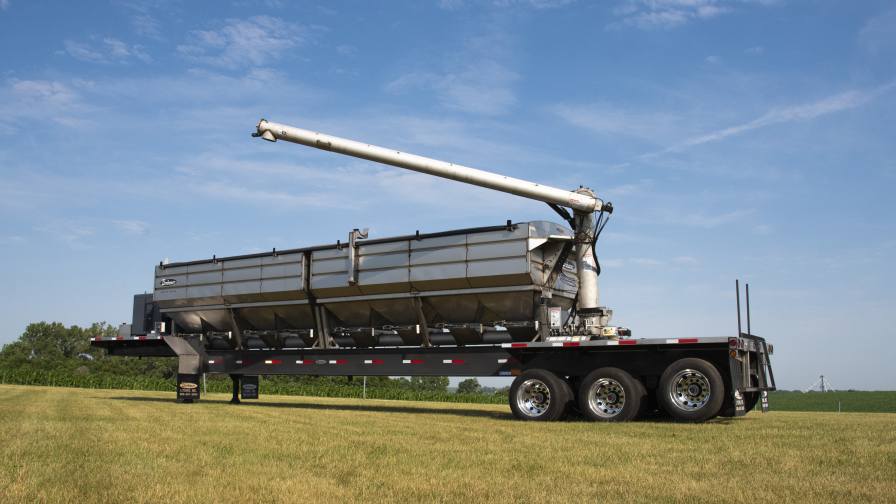
Brehmer Mfg. Overhead Discharge Tenders offer increased functionality with 270-degree rotation and top-mounted orbital motor on the vertical auger to reduce corrosion. Photo: Brehmer
In many parts of the country, the planting season appears to be narrowing. That makes delivering the right products at the right time requires the right tender.
Manufacturers find their customers are demanding their tenders deliver speed and efficiency.
At Brehmer Mfg., Inc., understanding the needs of growers in different regions is key to the company’s growth.
“We see a niche for Brehmer products along the East Coast, which would be a new market for us,” says Alex Brehmer, Vice President. “There has been a learning curve. The needs of that region are turning out to be far different than the needs of our Midwest users. We’ve been happy to tackle this learning curve. We think it will be worth expanding geographically and helping those potential customers see the Brehmer advantage.”
“We were unsure what it would do to our customer market,” Brehmer continues. “Would customers push off purchases until the next fiscal year to see how the economy would adjust? However, fertilizer tenders have become an essential piece of equipment for co-ops to provide services to farmers, and we saw an uptick in sales compared to previous years.”
One of the updates Norwood Sales Inc. provides customers is ensuring tenders are not one-task solutions.
“Some tender trailers have evolved to do multiple jobs and not been categorized into one job which makes them very useful and cost efficient to their owners — farmers, fertilizer companies, and co-ops,” says Cory Edic, Territory Representative.
The team at Hays LTI was also concerned 2024 might not be a stellar year.
“Leading up to the election we noticed a roller coaster ride with our economy, rising costs due to inflation, and the agriculture Industry was not exempt from these economic hurdles, says Matt Hays, Sales and Production. “We worked hard to keep our input costs down and pass on those savings to our customers. We offered promotional pricing and many different purchasing and rental options to find the best fit for our customers all over the country with the goal of getting them the equipment they need to operate their business. We have had a successful year.”
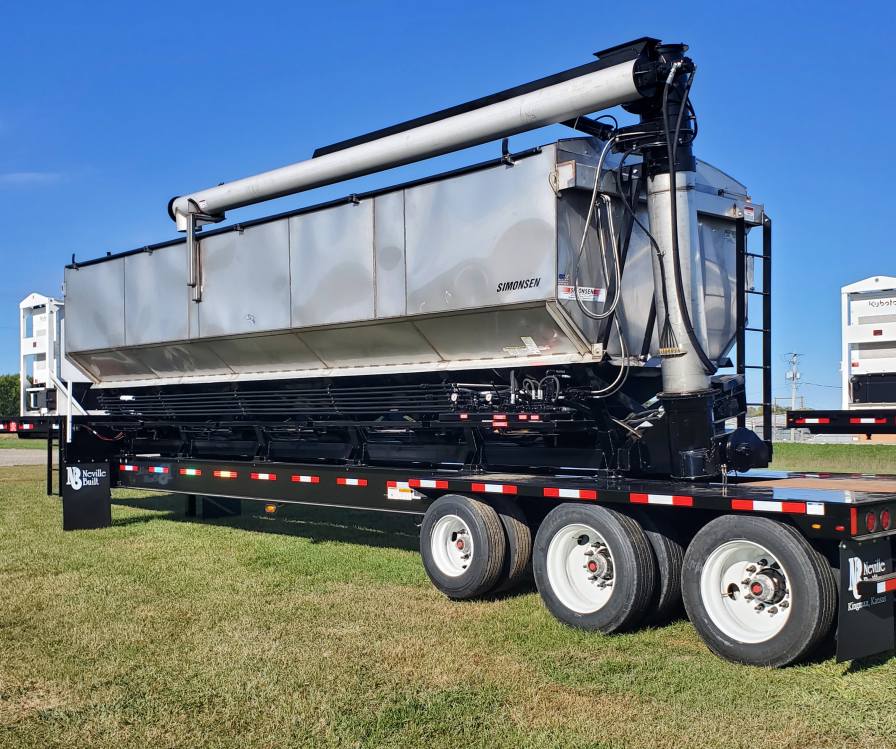
Simonsen Tenders use 304 stainless steel construction. Photo: Simonsen
At Simonsen Inc., it’s not the fundamental role of tenders that has changed. “Delivering fertilizer quickly and efficiently is the baseline requirement for tender manufacturers,” says Jon Simonsen, President. “What has changed is the goal to increase user friendliness, ease of maintenance, and safety.”
Market Drivers
In addition to those changes, customers are looking for “Speed,” Brehmer says. “The speed with which users can unload, refill, and get to a new location is essential — time is money. We’re always working to find ways to help our customers get more loads in the limited workday.”
Arnie Sinclair is Vice President, Strategic Accounts and Application at Titan Machinery agrees.
“With speed and efficiency in transfer of product, time is of the essence and faster transfer time means more time in the field applying and more acres covered per day,” he says. “We build a ‘premium’ line of tenders and offer both over the top and both sides discharge models. These both give much more flexibility and ease of use for retailers and helps drive the market.”
Spending limited time loading and unloading tenders is key, Sinclair says.
“As more retailers are building larger facilities and doing central dispatch, this often requires hauling longer distances, and the need for more tenders in an operation during peak seasons,” Sinclair continues. “The larger capacity tenders and speed of transfer become a factor to ROI of the units doing the application.”
Challenges
“One of the greatest challenges we face is the variability of our customers’ needs, Brehmer says. “Some want four-foot bins or five-foot bins, while others want eight-foot bins. The geography and general farming practices differ so much across the market.
“It can take time to convince customers to try a new way of doing things,” Brehmer continues. “Some have set up their entire operation to accommodate outdated technology.”
The market for tenders is constantly changing, which creates some additional challenges, Simonsen says.
“One of the biggest challenges to growing the tender market is the supply of used equipment available,” he says. “Also, as smaller facilities are combined into larger, single point blending facilities, there tends to be larger, but less quantity of tenders utilized. Also, driver availability has been a factor in the number of tenders that many facilities can utilize.”
According to Titan’s Sinclair the biggest challenge continues to be labor.
“Retailers (have trouble finding) drivers for tenders,” he says. “These drivers are often part-time positions and finding drivers with correct certification to be able to operate a semi is becoming more difficult.”
Updates
After learning customers’ wants and needs, Brehmer added a number of new products.
“After long conversations with our customers, we developed a five-foot bin series of dry fertilizer tenders,” Brehmer says. “Brehmer has also started offering nurse trailers custom-built to fit the stainless-steel tanks carried by our certified dealerships.
“We have expanded our field loader options with the FLX 1224 Field Loader. This conveyor can handle lime, and the hopper can easily disassemble and convert for low-profile loading of dry fertilizer.”
Delivering tenders with the latest features has been an ongoing deliverable from Hays.
“There is no ceiling when it comes to adding technology to tenders these days,” Hays says. “Updates in materials and engineering practices to increase the longevity of fertilizer tenders is always a major factor when implementing new features on a tender.”
Stainless-Steel and poly components are used frequently to help combat rust and the general wear-and-tear that all fertilizer equipment faces in its work environment.
Matching the possibilities to those needs is key according to Simonsen. “Depending upon the market, the biggest change in tender technology has been the move to 304 stainless steel construction,” Simonsen says. “Also, the focus has shifted somewhat from hauling the largest load possible to hauling the load safely and efficiently.
“The growth in the size of tenders had slowed significantly as the tenders have reached their maximum size possible in many areas,” Simonsen continues. “Many retailers are purchasing tenders that are ‘right sized’ for their business to safely minimize total turnaround time. Efficiency has taken precedence over sheer size.”
To emphasize the point, Simonsen says: “Price and value are two different things.”
Norwood’s Edic agrees that tenders need to add value.
“While there is still a need for certain tenders, there are other options out there that are more reliable, efficient, and dependable,” Edic says. “Something easy to run and work on when they do need repairs. Let alone good resale value when you decide to upgrade.”
Subscribe Today For
