7 Keys To Delivering Effective Fertility Programs: #1 Soil Testing
 May 1, 2013
 Agriculture today is being challenged. The task ahead for every person and entity in the crop production chain is clear: figuring out how to feed a growing global population using essentially the same number of acres while making best use of our limited resources.
This challenge has triggered a top-to-bottom review of best practices to determine what the industry is doing right, and what we can do better. One key focus is on the condition of our soils, and whether our fields are nutrient-optimized to reduce risk and maximize yield.
Not unlike the annual check-up we go through at the doctor’s office, a regular soil testing regimen sets the baseline to understand a field’s soil health and vitality. Adds long-time agronomist and researcher Dr. Harold Reetz, “soil testing is the only way we have of determining whether or not we have enough nutrients in the soil to grow healthy crops.”
Dr. Paul Fixen, senior vice president and director of research at the International Plant Nutrition Institute (IPNI), says that the idea of nutrient balance — comparing the amount applied to the amount removed by crop harvest — has been a key topic at meetings he has attended recently.
Through aggregating national soil test data, IPNI has determined that despite the benefits of optimizing yield, soil nutrient levels are often not where they need to be.
“The balances for phosphorus and potassium in much of the U.S. Corn Belt have become decidedly negative, and our soil test summaries have demonstrated that these negative budgets are frequently drawing down soil fertility to less than optimal levels,” says Fixen. Retail agronomists play two critical roles. First, they must ensure that accurate and regular soil tests are a part of the fertility program. Second, they must reinforce with growers the importance of following scientific recommendations to more fully realize the yield potential of the crop and maintain the long-term value of the land.
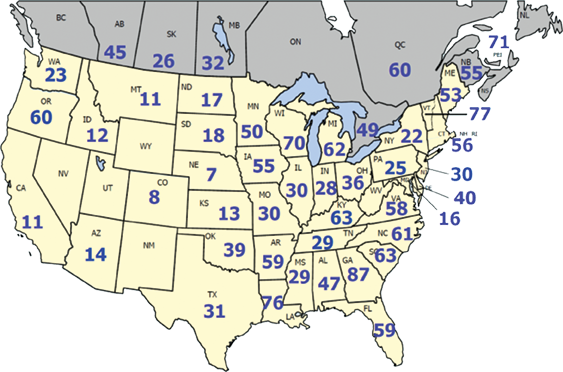
 The maps reveal the percentage of soil samples that are below critical levels for major crops in phosphorus (at left or top) and potassium. 2010 data courtesy of IPNI. Click to enlarge.
What To Consider When Selecting Your Starter Fertilizer
The use of starter fertilizer materials is an important decision for your farming operation. Make certain your crop is getting the adequate nutrition early in the growing season to make high yields achievable.
- Soils with low-soil-test phosphorus and potassium are prime soils for applying a complete macronutrient starter package.
- Tillage is a major factor on selection when using soil-test information to make starter-source decisions.
- Starter formulations with sulfur and micronutrients are also an option. However, soil type is a major factor when considering this formulation.
- High pH testing soils can respond well to starter fertilizers that contain zinc, manganese or other micronutrients.
- Soils that produced nutrient-deficient crops in the past can benefit from starter fertilizer containing the deficient nutrient.
- For farmers that rely primarily on sidedress nitrogen for the bulk of the nitrogen budget, starter materials with a good amount of nitrogen can go a long way toward ensuring adequate nitrogen nutrition until sidedress time.

About The Series
The fertility program is at the heart of a comprehensive cropping plan, and a central part of the relationship between ag retailers and growers. The CropLife 100 Retailers survey data as compiled in 2012 reported that in aggregate, 55 percent of crop input and service revenue was generated from the sale of fertilizer.
Not surprisingly, fertilizer program management attracts the lion’s share of attention. Effective management of fertilizer on behalf of growers requires a complete understanding of field and crop needs, proper prescription development and accurate application, and scouting and monitoring. Then at season’s end, a full evaluation to compare past planting seasons is required as planning commences for the season ahead.
To highlight the important aspects of fertility management programs, CropLife magazine and PotashCorp are pleased to present the Seven Keys to Delivering Effective Fertility Programs.
Subscribe Today For
