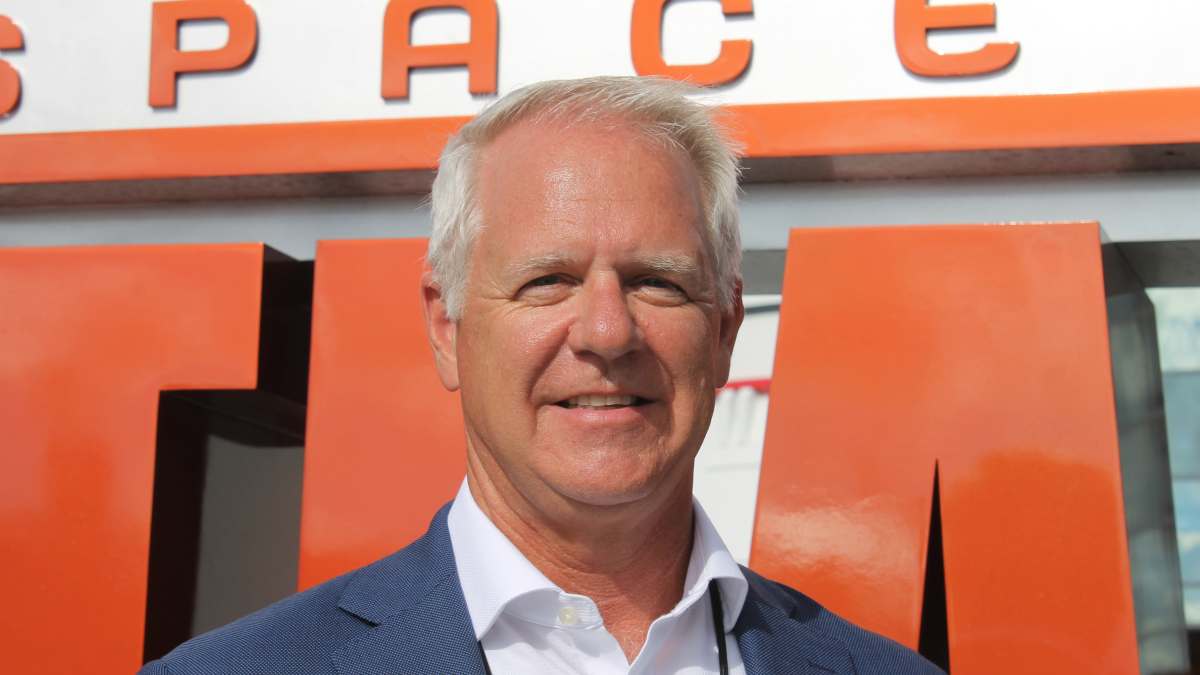
The WinField Crop Adventure grand opening ceremonies at Fair Oaks Farms (near Winemac, IN) welcomed USDA Secretary of Agriculture Tom Vilsack — among various ag industry luminaries such as Monsanto President and COO Bret Begemann — on Wednesday.
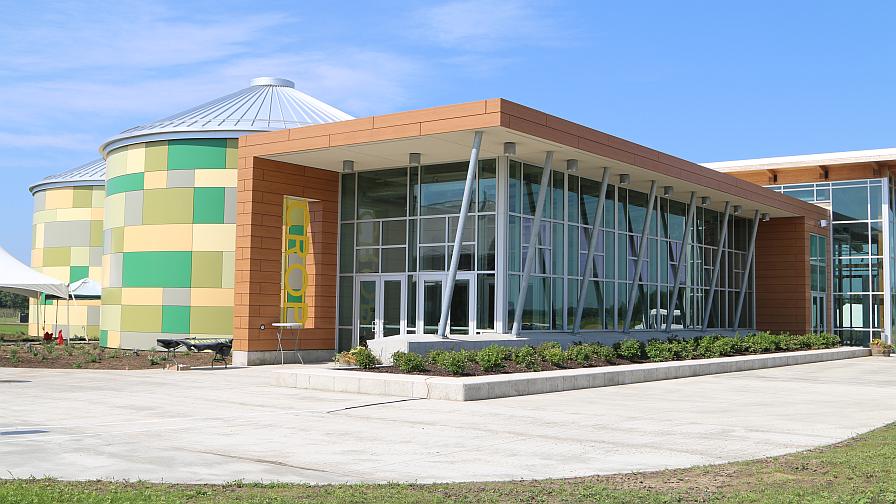
WinField Solutions (a wholly owned Land O’Lakes subsidiary) reportedly invested around $12 million in the impressive and newly opened WinField Crop Adventure experiential agriculture education exhibit, which is located at and was developed in partnership with Fair Oaks Farms in Fair Oaks, IN.
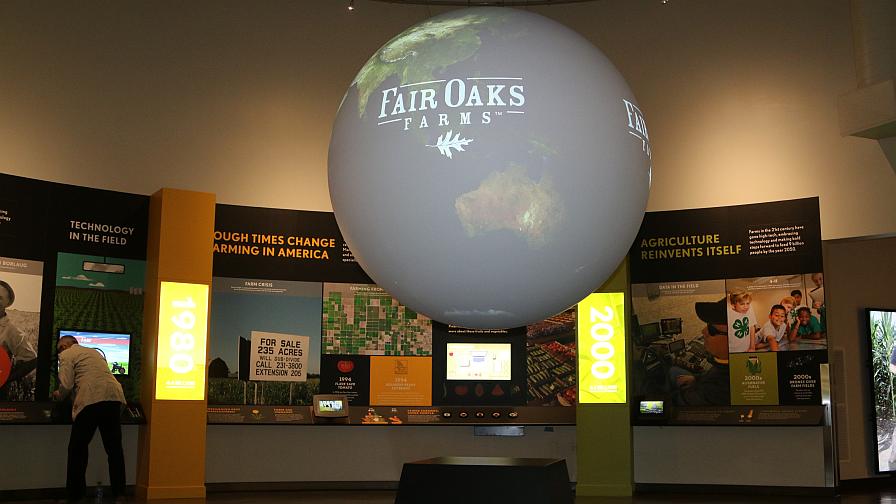
One of the most impressive aspects of the exhibit (in this author’s humble opinion) is its comprehensive and yet well-balanced narrative covering not only the history of American farming, but also presenting unbiased information on today’s farming practices and how agriculture might look in the future.
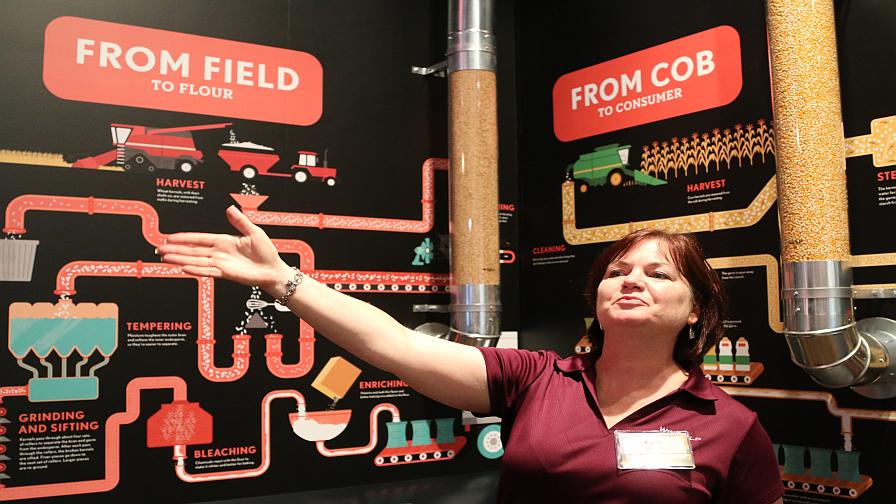
WinField Integrated Marketing Communications Director Faye Bliese — who helped lead the development of the WinField Crop Adventure along with a host of others — led the inaugural media tour of the facility on June 15, 2016.
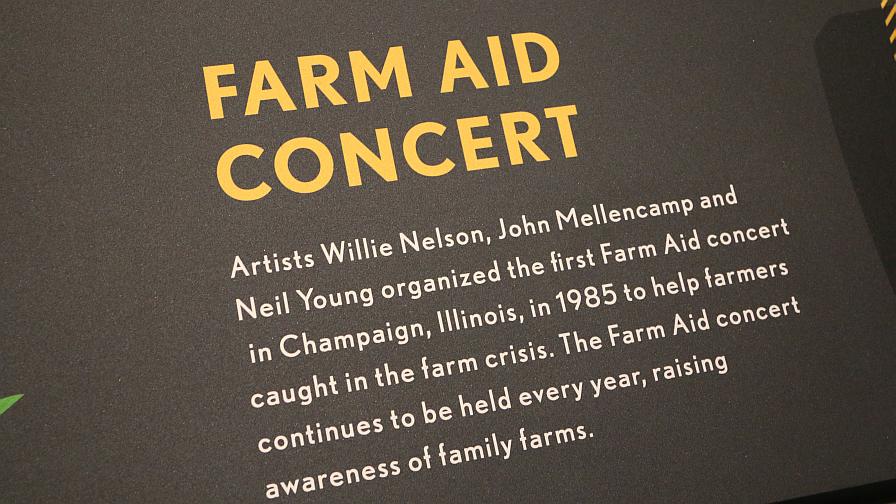
As stated in an earlier slide, the exhibits at the WinField Crop Adventure may be the most comprehensive presentation of the history of American agriculture that this author has ever witnessed. Topics covered ranged from the above blurb on Farm Aid (which many Millennials have no doubt never heard of) to the effect that the proliferation of fast food restaurants had on production agriculture in this country.
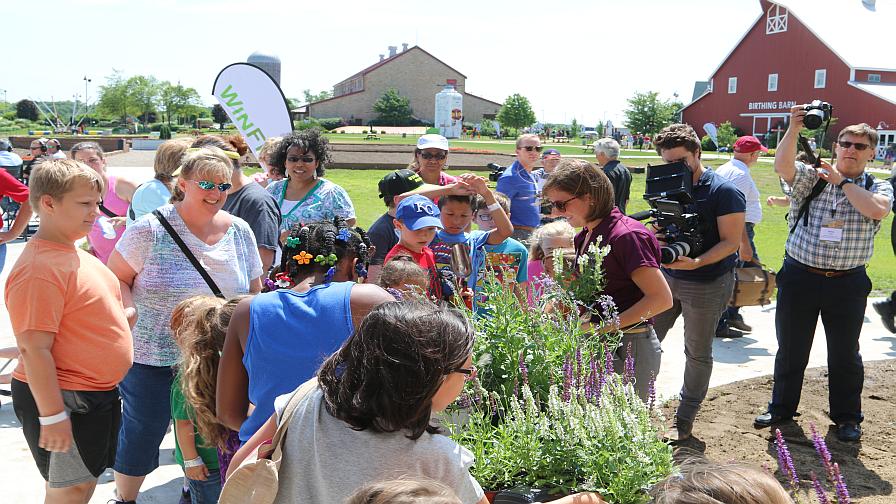
A pollinator garden has been planted in front of the entrance/lobby of the WinField Crop Adventure. WinField and Land O’Lakes invited local school kids to help with the planting for the day. Colle + McVoy senior account executive Kayla Bries helps the children find their plants.
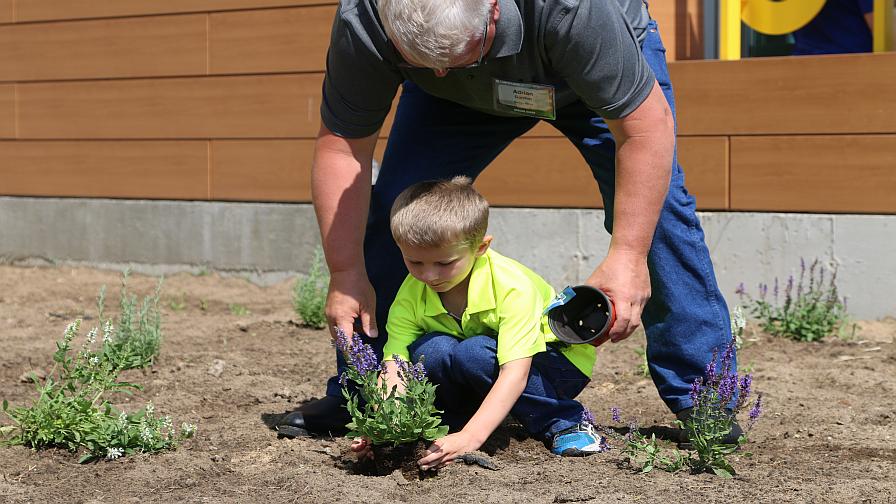
Prior to the arrival of the other children, young Ayson Gordon (age 5, Murdock, MN) and his grandfather Adrian Gordon, who farms 6,500 acres of corn, soybeans and sugar beets on his second-generation farm, get a head start on the pollinator garden planting.
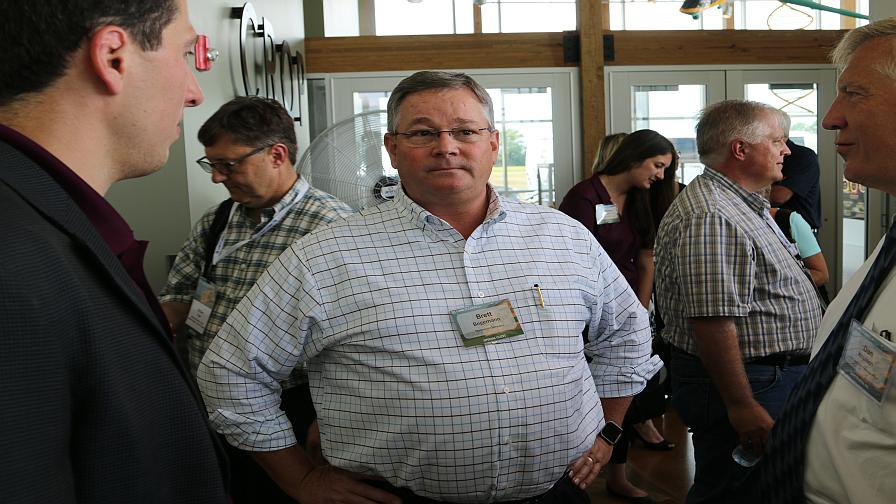
Land O’Lakes and WinField brought out the luminaries for this event, including Monsanto President and COO Bret Begemann. Other notable attendees included outgoing U.S. Secretary of Agriculture Tom Vilsack, Land O’Lakes President and CEO Chris Policinski, and others.
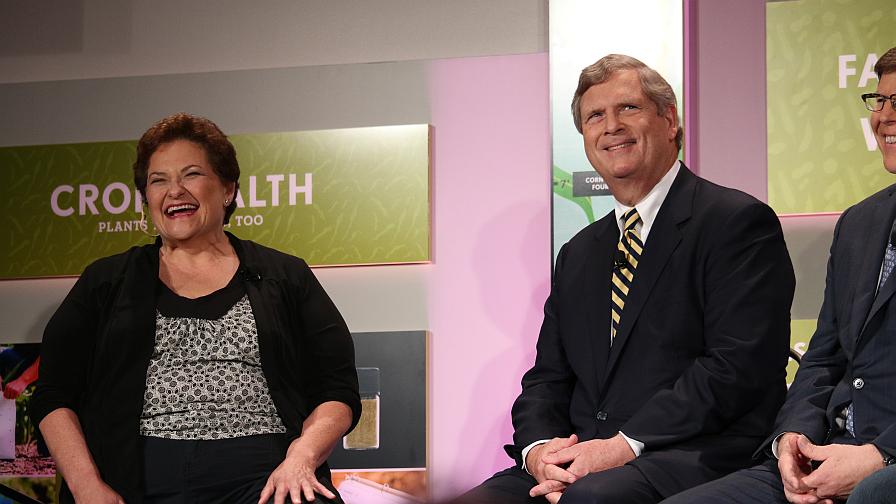
A panel discussion featuring engaging moderator Wisconsin Farm Report’s Pam Jehnke (The Fabulous Farm Babe), Secretary Vilsack (both pictured here), Policinski, Fair Oaks Farms co-founder Mike McCloskey, and WinField COO Mike Vande Logt.
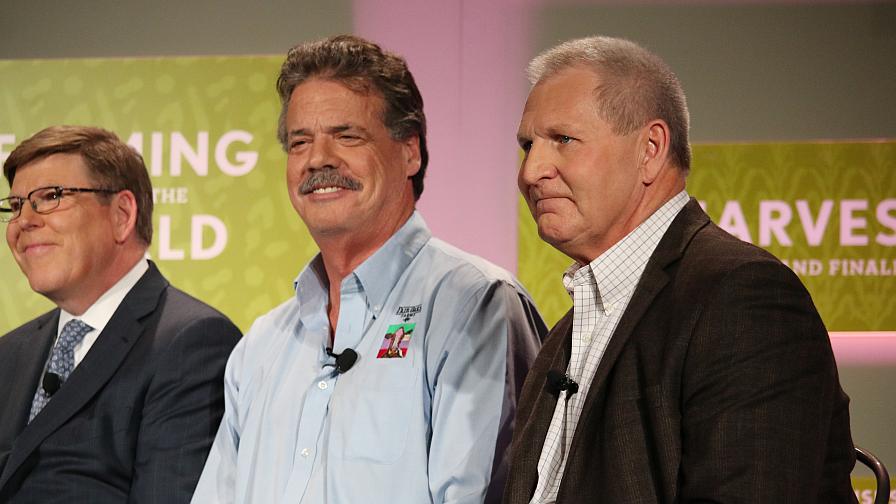
Fair Oaks Farms co-founder McCloskey and Vande Logt during the panel discussion. The discussion was titled “Fields of the Future” and was live broadcast around the world via the Internet.
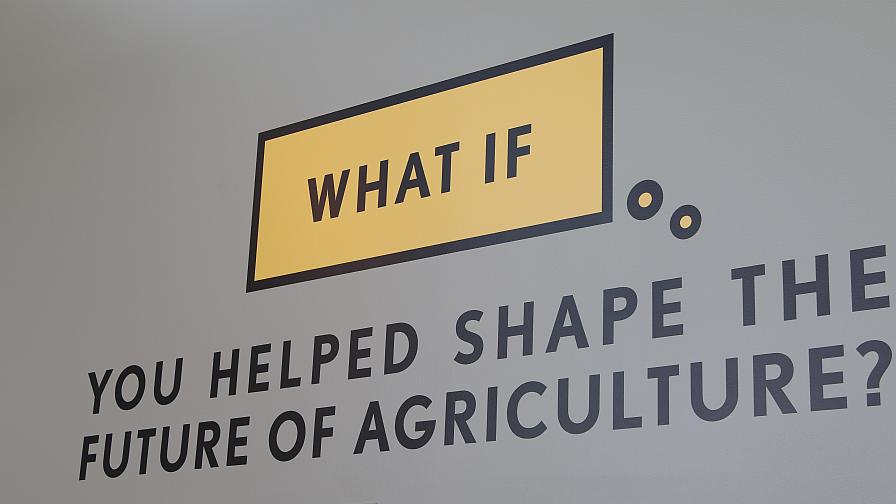
Pretty much the entire exhibit is meant to leave this last thought on the minds of the young folks from nearby urban areas that come to tour the Crop Adventure.
Following are some of Vilsack’s comments from a “press gaggle” after his participation in the Fields of the Future live broadcast:
On his impressions of the WinField Crop Adventure:
“This is a tremendous new adventure that agriculture is on. Land O’Lakes and WinField have come together to create this adventure center. I’ve taken the tour of it, and I’ve learned a lot as I went through it, and I just got incredibly excited about the opportunity that it will create to partner with what the folks at Fair Oaks have done on the pork and dairy side, to educate people who will travel here as a destination.
“This is a huge commitment by Land O’ Lakes to invest in this, because I think that Chris and the folks at Land O’Lakes genuinely believe this is a story that needs to be told in a way that can speak to the 98, 99% of America that does not farm, and the 98% of America that are several generations removed from anyone in their family that was a farmer. It’s a story that tells the importance of the land, and good stewardship. It’s a story that tells the need for economic sustainability, and within the Fair Oaks complex it’s a story that also talks about the care and well-being of animals. I think it presents a more typical view of what American agriculture does and is than is typically presented in other venues.
“And it actually is a working farm, so as Pam (Jehnke) said, it’s not a petting zoo. It is a place that says here’s where your milk comes from, here’s where that pork chop that you enjoyed at the restaurant comes from. In the future all of that depends on the crops that are produced, and here’s how that works. And here’s everything that goes into how that works, so the people understand that it’s complicated and comprehensive, it’s also explaining to young people that there are multiple opportunities throughout agriculture and agribusiness that they can get excited about.”
On the Trans Pacific Partnership legislation, GMO Labeling, and whether he can get both initiatives through Congress before his term expires with the upcoming change of power in the White House:
“I’ve talked to Senator (Pat) Roberts and briefly to Senator (Debbie) Stabenow about the labeling issue, and I know those two senators are working hard – they need help from their colleagues in the Senate, frankly. This is not an issue that lends itself to ideology, it’s doesn’t lends itself to my-way-or-the-highway kind of thinking. It does lend itself eventually to a compromise that recognizes the need for consumers to have information, but to get it in a way that doesn’t disparage the product – and that’s the key. It’s always been the key. We’ve always provided technical assistance and we’ll continue to provide assistance and help. My hope is that those senators continue to work hard and eventually get to a point where their colleagues will see the wisdom of a national comprehensive approach, as opposed to essentially allowing states and individual countries to make these decisions.
“With all due respect to the states making those decisions, it will create a Hodge-podge of various labeling schemes that will create uncertainty in the market, will create potentially higher costs and/or lack of supply. And certainly it isn’t the way, when you sit down with folks who are reasonable, everybody understands we need a national standard.
“On the trade issue I continue to remain optimistic. I will tell you that I think agriculture has done an incredibly good job of advocating for trade and the importance and benefit of trade, and candidly I think that other industries in the U.S. need to pick it up, as agriculture has, so that folks understand that this is about job creation, this is about wealth creation. Consumers have incredible choice and less expensive goods in part because of trade, so the benefits of trade I don’t think have been as well-articulated by some and I think agriculture has done a great job and if every other industry that benefits from trade did as good a job as agriculture I’m very confident that we’d get the right decision made.”
On whether he has any reservations about the rumored Bayer-Monsanto merger:
“You know, I have to be careful about this, so let me simply say this: I certainly understand that farmers want and need choice, and I certainly understand that farmers want and need continued innovation. I happen to be a person who believes that there is incredible innovation taking place, and that there are opportunities that will arise from patents on seeds that will be expiring in the near future, that will help create new businesses, new companies and new opportunities.
“I think there are obviously going to be a lot of questions and there’s going to be time taken to ensure the questions are asked and appropriately answered, in terms of any of these proposals, any of these suggestions, any of these consolidations. My job is to make sure that people understand that we’re going to continue to do what we can to promote research, to create new products which we believe will ultimately lead to choice — and choice will lead to competition, and competition will lead to farmers having access to the best choice and seed for their operation, and hopefully at a price they can afford.
“We have something going here in the U.S. in terms of our agriculture…and I think we want to keep all of those benefits, and part of keeping those benefits is making sure farmers have access to seed, making sure that its affordable and making sure that it continues to innovate and responds to the challenges we’re going to definitely see with climate, with more pests and more diseases, tougher weather conditions…we need to be in a position to continue to support research.
“The underlying message to all of this is we need to get more serious in this country in investing in public research. We’ve seen small incremental increases in research dollars in the last several years and we’re thankful for that, but frankly the President has suggested a leap (forward) in terms of publicly funded research — I think Congress should take that leap. We have just as much strength behind our case as the healthcare industry has when they say we’re going to work on a cure for cancer or some terrible disease. Well, I think we can honestly say that we might be able to prevent cancer through food production. We might be able to produce more sustainable energy supplies through crops and animals. We might be able to reduce food waste which will help us reduce our carbon footprint; we can do all of that but we’re going to need to spur innovation and invest in innovation, and that means publicly funded research.”