Stewardship Across The Chain
 September 9, 2008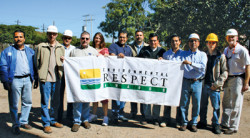
Change is constant, and learning to cope is critical. And, as agriculture becomes more global, there is much to learn from others in similar businesses, whether they are in the next county or half-way around the world. That’s what one U.S. ag retailer took away from his recent trip to Mexico.
“I would never have been able to imagine how much I would learn from this trip,” said Ted Deerkop, manager of The McGregor Co.‘s Garfield, WA, location, as he prepared to return home. The McGregor Co. — Garfield, was recognized as the 2006 Environmental Respect Award National Winner, and Ted and his wife, Louanne, made the trip as a result of this award. The Deerkops visited Latin America winner Pro-Agro del Noroeste near Culiacán, Mexico, and other Mexican locations as guests of DuPont Crop Protection, CropLife® and Farm Chemicals International.
Pro-Agro: Social Responsibility
In a conference room in Pro-Agro’s new office, Cosme Cota, Culiacán Branch Manager, presents the Pro-Agro story in English to his guests and co-workers. Pro-Agro’s story of success as a dealer/distributor of crop inputs is similar to many ag retail businesses in the U.S.: hard work, service to growers, and education in helping customers understand the value of knowledge and service.
Founded in 1986 and owned by Roberto Hererra, Pro-Agro considers its competitive edge to be made up of three elements: a full line of crop input products, the best technical support, and “truly personal service.” Making it work, said Cota, is a commitment to people.
“It’s very clear to us that a company’s future can not be built without quality, committed people who will not neglect their responsibility to protect the environment as they serve our customers,” said Cota.
Pro-Agro, explained Cota, is intent on providing state-of-the-art technology that enables growers to express value through the chain. The 70 top growers they serve are shipping about 90% of their vegetable products to the U.S. Pro-Agro works to hold their customers to U.S. regulatory standards rather than those of Mexico. The company achieved an ISO 9001 certification in the year 2000 for its efforts toward a quality process for service.
Stewardship issues, it would seem, run across borders and throughout the value chain. Product stewardship, as practiced by DuPont and other basic manufacturers, is also expressed through companies like the McGregor Co. and Pro-Agro. In turn, those dealers and distributors must help growers express this stewardship to the consumer. Whether it’s proper product use or appropriate food safety measures, missteps may affect the whole chain. Just ask any spinach grower about the effect of tainted produce.
Agricola Pony: Premier Brands
Jesus Masao Castro blows the horn on his white pickup truck. It’s the signal for his employees to come to the packing facility. The trucks full of tomatoes are arriving from the field and he needs all hands on deck.
A forklift unloads huge white bins from the truck and an automated system takes over, tipping the tomatoes down a chute into their disinfecting bath, then rinse, then a sort for obvious culls, another electronic sort by size and color and a final sort by hand into waiting boxes bearing one of three Agricola Pony brands. It’s a process that continues seven days a week during the long growing season in the tomato state of Sinaloa, Mexico.
This growing operation is clean to the point of compulsion. A small snack food wrapper has somehow found its way onto the concrete apron of the processing plant. In seconds, it gains the hurried attention of a nearby worker dashing to retrieve it before it’s noticed.
It’s a part of the culture for this Mexican company that sells 3.5 million 25-pound boxes of special Roma tomatoes each year in the U.S. Masao, who started the business 40 years ago, knows that continued success for him and his son, Omar, in marketing his produce in the U.S. requires a special emphasis on food safety. His system is working; the Agricola brands are commanding a premium price. Pro-Agro adds value to this business relationship by helping Agricola safeguard its produce — and its image — from the time the seed goes into the soil.
How much things change; how much they stay the same.
We are standing in the Museum de Anthropologia in Mexico City reading a translated account of how Mayan agriculture operated and how important corn was to that society, hundreds of years B.C.
One museum writing points out that those Mayans who studied the way corn grew and became experts in these agronomic activities were revered as having a special knowledge of their gods. These ancients studied the weather, the soil, the path of the sun, they studied the plant. In many ways they were considered priests.
Ted Deerkop chuckles when I mention that perhaps this is a description that his big wheat-growing customers of the Palouse would buy, since they so rely on advice from him and his staff. “Yeah, I may not be charging enough,” he smiles. But then, today’s U.S. ag dealers don’t run the risk of being publicly sacrificed, either, as did some Mayans.
It’s fair to say that Mexico’s tradition of “crop advisors” or “agronomic consultants” predates our own U.S. experience. In the U.S. during the 17th Century, there was Squanto, long the example used by the fertilizer industry as the origin of the knowledge of plant nutrition in the U.S. The Mayan culture was studying this about 2,000 years earlier.
After eight days of touring dealerships and growing operations in Mexico, what did we learn? Environmental stewardship crosses centuries, time zones and countries. It is important, not only to agricultural dealerships, but across the entire value chain. Manufacturers are pioneering new ways to help dealers; dealers are looking for the best ways to serve growers and growers are looking to serve their customers with the best products. Top notch business, in all areas of agriculture globally, focus on customer service, environmentalism and ultimately food safety — from seed to supermarket.
Subscribe Today For
